Caring for someone with brain disease like Alzheimer’s or other forms of dementia can provide special challenges. One of the most difficult can be handling your loved one’s anger, confusion, and agitation. These are emotions we all have, but those with brain disease may lack vital centers that help regulate them. Remember too that these emotions are driven largely by the frustration of not being able to communicate clearly, which is something we can all understand. Here are some ways caregivers can help when tough situations arise.
Aggression: If the person you care for becomes aggressive…
- Try to understand what triggers the aggression so you can prevent outbursts in the first place.
- Remove any items in the house that could be used to cause harm. You can put locks on cupboards containing knives and sharp objects.
- Make sure that doctors and family members know about a senior’s aggressive behavior, which can be related to medications. Doctors who specialize in geriatrics can also give advice on how to handle aggressive behavior.
- Protect yourself. Plan safe places in the house you can go to in case there is an outburst.
Confusion: If the person you care for becomes confused…
- Avoid making changes to their environment such as rearranging furniture or adding new items to the home.
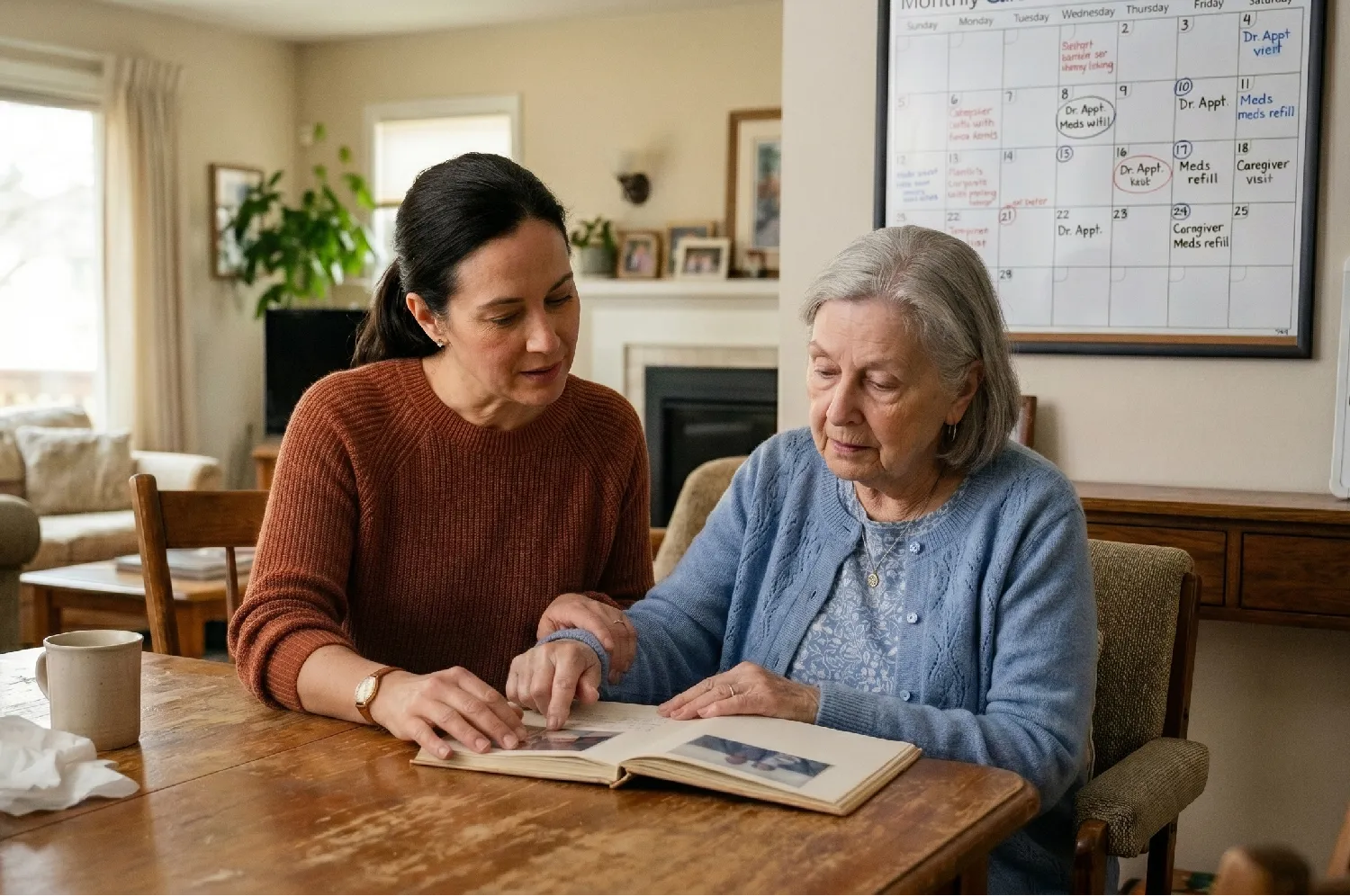
- Post notes and reminders on bulletin boards as a way for them to know upcoming events or important appointments.
- Put nightlights in hallways and bathrooms so they can find their way in the dark.
- Keep some large clocks and calendars throughout the house so they can reference the day and time.
Agitation: If the person you care for becomes agitated…
- Reduce intake of foods that cause spikes in energy such as sugar and caffeine.
- Use gentle music, touch, walking or reading to help stop agitation.
- Keep the same routine each day to avoid confusion. Keep photos and familiar objects throughout the house to offer a sense of security.
- Distract the senior with an activity or a snack. This can help them forget the incident.
Remember, it can be extremely frustrating for seniors living with Alzheimer’s and other forms of dementia. Help them maintain their dignity and safety by continuing to treat them as individuals and being patient with their unique needs.
At Assisting Hands serving Cincinnati, OH we are implementing dementia educator Teepa Snow’s Positive Approach® to Care (PAC) methods. (Click here to read more.) We have a certified trainer on staff who trains all our caregivers on how to compassionately and effectively care for those living with brain disease. We also offer training for families in our facility or in their loved one’s home – to help them manage the unique challenges presented by Alzheimer’s and dementia. It’s all part of the Assisting Hands Way. Contact us today to learn more.