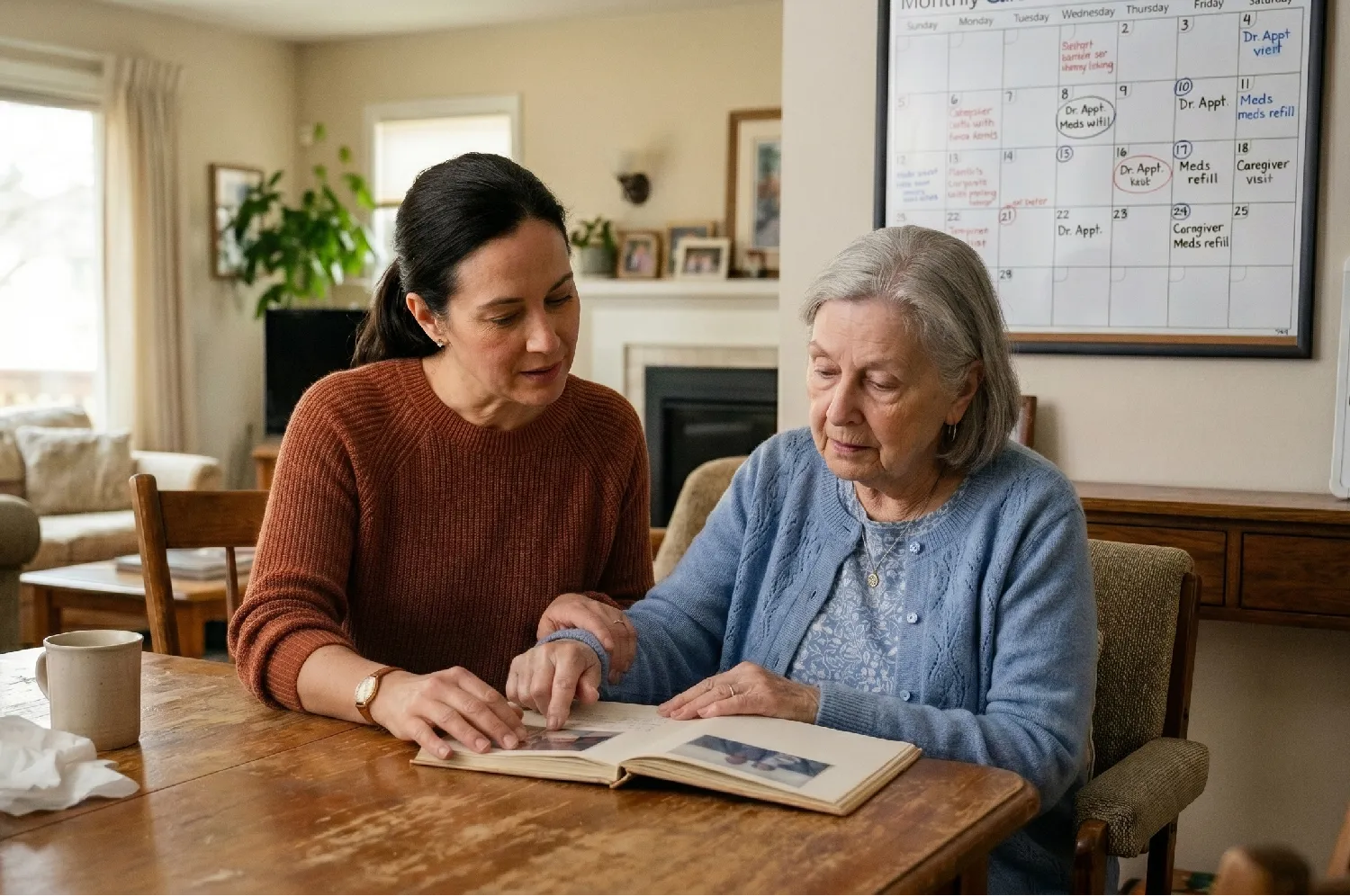
A good in-home dementia care schedule breaks the day into predictable blocks—morning routines, meals, activities, rest, and wind-down time—anchored by consistent timing. Predictability reduces confusion and anxiety, making each day calmer for seniors living with dementia and their caregivers.
Structure brings comfort to people living with dementia. When mornings, meals, and activities happen at the same time each day, the brain has fewer surprises to process, which often eases stress and frustration. This guide walks you through how to build a clear, repeatable daily schedule at home for your senior loved one.
Why Does a Daily Routine Matter for Someone with Dementia?
A consistent routine gives the day a familiar shape, which can lower anxiety and reduce confusion. When seniors with dementia always know what comes next, they feel more secure and in control.
Key benefits include:
- Less confusion – Familiar patterns require less mental effort to follow.
- Fewer behavioral challenges – Predictability can reduce agitation and restlessness.
- Better sleep – Regular wake and rest times steady the body clock.
- Smoother caregiving – A plan helps caregivers stay organized and calm.
Highly trained caregivers with experience in caring for seniors with memory challenges can be fantastic resources for family members who need help creating daily routines for their loved ones. Families looking for top-rated Cincinnati at-home care providers can reach out to Assisting Hands Home Care. From respite care to specialized Alzheimer’s, dementia, stroke, and Parkinson’s care, there are many ways we can make life easier for seniors and their loved ones.
How Should You Structure the Morning?
Mornings set the tone for the entire day, so keep them slow and steady. Aim for the same wake-up time daily, even on weekends.
A simple morning flow might look like:
- Wake and greet – A warm, calm greeting that orients your loved one to the day
- Personal care – Dressing, washing, and grooming at a relaxed pace
- Breakfast – A consistent mealtime in a quiet, well-lit space
- Light activity – A short walk, stretching, or sitting by a window
Tackle tasks that need the most focus in the morning, when energy and alertness are often highest.
What Activities Work Best during the Afternoon?
Afternoons are a good time for gentle engaging activities that match your loved one’s interests and abilities. The goal is connection and purpose, not pressure.
Consider rotating through options like:
- Creative tasks – Coloring, simple crafts, or listening to music
- Household helping – Folding towels, sorting items, or watering plants
- Social time – A visit, a phone call, or looking through photo albums
- Quiet rest – A short nap or calm time to prevent overtiredness
Watch for signs of fatigue and keep activities short and flexible.
How Do You Handle Evenings and Late-Day Restlessness?
Many people with dementia grow more restless or anxious as the light fades, a pattern often called sundowning. A calm, predictable evening routine can ease this transition.
Helpful evening steps include:
- Dim distractions – Lower noise, turn off busy TV shows, and soften lighting.
- Light dinner – Serve an earlier easy-to-eat meal.
- Wind-down ritual – Provide gentle music, a warm drink, or quiet conversation.
- Consistent bedtime – The same nightly sequence signals it’s time to sleep.
Keeping evenings consistent helps the body recognize the day is ending.
How Can You Stay Flexible within a Routine?
A schedule is a guide, not a strict rulebook. Some days will go off track, and that’s completely normal.
Tips for staying flexible:
- Follow your loved one’s cues – Adjust the timing if your loved one is tired, hungry, or upset.
- Build in buffer time – Allow extra minutes between activities.
- Keep a written plan – A visible schedule helps everyone stay on the same page.
- Review weekly – Tweak the routine as needs and abilities change.
Recovering from a serious illness, managing the symptoms of dementia, and a variety of other health-related situations can make it difficult for a senior to continue living at home without someone there to help. Cincinnati 24-hour home care professionals are trained to help seniors who need 24/7 assistance. With the help of an around-the-clock caregiver, your elderly loved one can maintain a higher quality of life while aging in place.
Aging in place can present a few challenges for seniors living with dementia. However, with professional dementia home care that offers Cincinnati families peace of mind, they can still live independently at home. Families can rely on Assisting Hands Home Care to provide their elderly loved ones with mental and social stimulation, timely medication reminders, assistance with meal prep, and much more. Our caregivers are available around the clock to help your loved one live a happier and healthier life. To create a customized in-home care plan for your loved one, call us today.
Frequently Asked Questions
What’s the best daily routine for a person with dementia?
+
The best routine is consistent, simple, and built around your loved one’s habits and energy levels. Anchor the day with regular wake times, meals, activities, and bedtime.
How do I create a daily schedule for dementia care at home?
+
Start by mapping out fixed points like meals and bedtime, then fill in activities and rest periods around them. Write it down and keep it visible for both the caregiver and the person receiving care.
Why do people with dementia get more confused in the evening?
+
This pattern, known as sundowning, often involves increased confusion or restlessness as daylight fades. A calm, low-stimulation evening routine can reduce these symptoms.
How often should a dementia care schedule change?
+
Keep the core structure stable, but review it weekly and adjust as your loved one’s abilities and needs shift over time. Small gradual changes are easier to adopt than big ones.
Should activities be planned for the morning or afternoon?
+
Schedule demanding or focus-heavy tasks in the morning, when alertness tends to be highest, and save lighter calming activities for the afternoon.