Caring for a senior loved one with dementia often involves navigating challenging behaviors that can feel overwhelming and unpredictable. These behaviors are typically expressions of unmet needs or responses to confusion and frustration. Understanding effective management strategies can help both caregivers and individuals with dementia maintain dignity and quality of life.
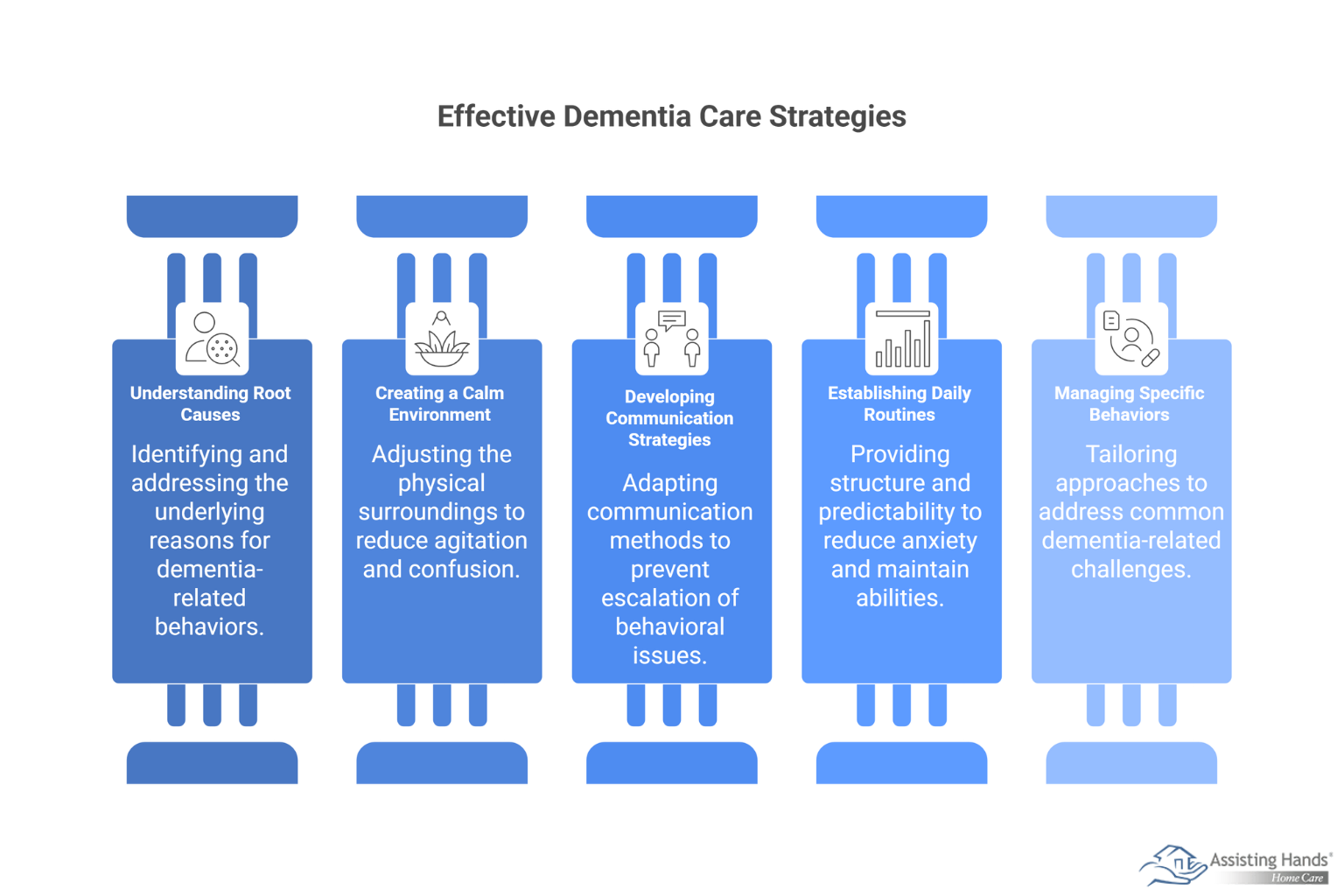
Understand the Root Causes
Dementia-related behaviors rarely happen without reason. Common triggers include physical discomfort, environmental changes, or unmet emotional needs. Before addressing any behavior, consider what might be causing it:
- Physical needs – Hunger, thirst, pain, or the need for a bathroom break
- Environmental factors – Loud noises, unfamiliar surroundings, or too much stimulation
- Emotional distress – Feeling lost, scared, or frustrated by the inability to communicate
- Medical issues – Infections, medication side effects, or other health problems
Identifying patterns in when and where behaviors occur can help you address the underlying cause rather than just the symptom.
The cognitive challenges that accompany dementia often leave aging adults unable to manage everyday tasks, which puts their safety and health at risk. The type of home care service Cincinnati seniors need can vary. Some need assistance a few hours a day, while others require more extensive around-the-clock assistance. At Assisting Hands Home Care, we tailor our care plans based on each senior’s individual care needs, and the plans can be adjusted at any time. We are a trusted provider of respite and 24-hour care, and we also offer specialized Alzheimer’s, dementia, Parkinson’s, and stroke care for seniors.
Create a Calm Environment
The physical environment plays a crucial role in managing dementia behaviors. Small adjustments can make a significant difference in reducing agitation and confusion.
Visual and auditory considerations:
- Reduce background noise from televisions, radios, or conversations.
- Ensure adequate lighting throughout the day.
- Remove mirrors if they cause distress or confusion.
- Use contrasting colors to help your loved one distinguish between objects and surfaces.
Safety and comfort measures:
- Keep familiar items within reach.
- Maintain consistent room temperature.
- Create clear pathways free of obstacles.
- Use simple, easy-to-read labels on doors and drawers.
A predictable, organized space can reduce anxiety and support independence for as long as possible.
Caring for a loved one with dementia is a challenging task for anyone. The responsibilities can sometimes feel overwhelming, but help is available. Certain age-related conditions can make it more challenging for older adults to age in place safely and comfortably, but experts in live-in care for Cincinnati seniors are available around the clock to help aging adults manage their health. Whether your loved one is living with dementia or recovering from a stroke, you can trust the professional caregivers from Assisting Hands Home Care to enhance his or her quality of life.
Develop Effective Communication Strategies
Communication challenges are common in dementia, but adapting your approach can prevent many behavioral issues from escalating.
Verbal communication tips:
- Speak slowly and use simple, clear sentences.
- Ask one question at a time and wait for responses.
- Use positive language and avoid arguing or correcting constantly.
- Repeat important information calmly if needed.
Nonverbal communication:
- Maintain eye contact and use gentle facial expressions.
- Keep your body language open and nonthreatening.
- Use touch appropriately to provide comfort and connection.
- Pay attention to your loved one’s body language for clues about his or her needs.
Remember your loved one’s ability to understand may fluctuate throughout the day, so patience and flexibility are essential.
Establish Consistent Daily Routines
Structure and predictability can significantly reduce anxiety and behavioral challenges in people with dementia. A well-planned routine can provide security and help your loved one maintain existing abilities.
Morning routines:
- Wake up at the same time each day.
- Follow the same sequence for personal care activities.
- Include familiar breakfast foods and beverages.
- Plan engaging but manageable morning activities.
Throughout the day:
- Schedule regular mealtimes and snacks.
- Include physical activity appropriate to your loved one’s abilities.
- Plan rest periods when energy typically wanes.
- Incorporate enjoyable activities like music, puzzles, or gentle crafts.
Flexibility within structure is important. If your loved one is having a particularly difficult day, adjust activities while maintaining the overall routine framework.
Manage Specific Challenging Behaviors
Different behaviors require tailored approaches. Here are strategies for common dementia-related challenges.
Sundowning (increased agitation in late afternoon/evening):
- Ensure adequate daytime light exposure.
- Plan more demanding activities for earlier in the day.
- Create calming evening routines with soft lighting and quiet activities.
- Consider whether medications might be contributing to sleep disruption.
Wandering or pacing:
- Provide safe spaces for movement.
- Use redirection techniques to guide your loved one to appropriate areas.
- Address potential causes like boredom, anxiety, or physical discomfort.
- Consider whether your loved one is searching for something specific.
Repetitive questions or actions:
- Respond with patience and avoid showing frustration.
- Write down answers to frequently asked questions.
- Redirect attention to engaging activities.
- Look for patterns that might indicate underlying needs.
Resistance to personal care:
- Approach care tasks when your loved one is most receptive.
- Break tasks into smaller, manageable steps.
- Offer choices when possible to maintain autonomy.
- Use distraction techniques like playing favorite music during care.
Even when families have the best intentions, caring for a senior loved one with dementia can be challenging. Fortunately, Assisting Hands Home Care is here to help. We are a leading provider of dementia care Cincinnati families can trust. You can take advantage of our flexible and customizable care plans, and our caregivers always stay up to date on the latest developments in senior care. If you need professional care for your loved one, reach out to one of our Care Managers today.