According to the U.S. Centers for Disease Control and Prevention 2.8 million seniors are thought to have severe vision impairment—defined as either blindness or difficulty seeing, even with eyeglasses. Most vision problems develop painlessly with no symptoms. They also tend to come on slowly, making it difficult for individuals to notice changes in their vision.
Getting an annual eye exam is important for people of all ages, but especially for older individuals. Senior citizens are more prone to eye disorders such as glaucoma, cataracts and macular degeneration than younger people. Early detection is critical with these three diseases.
Age-related eye problems can develop painlessly and have no early symptoms. Individuals may not even experience changes in their vision until the condition has become more advanced.
Annual eye exams help seniors keep regular tabs on their eye and overall health. Eye exams can also uncover other potential health problems such as artery blockages, hypertension, high cholesterol and diabetes.
There are three key effects of senior vision loss, but attention from caregivers can mitigate these risks.
Senior Vision and Driving
Age-related vision changes and eye diseases can negatively affect driving abilities, even before an individual notices any symptoms. Some vision changes that affect seniors’ ability to drive include:
- Not being able to clearly see road signs
- Difficulty seeing objects up close, like the car instrument panel or road maps
- Difficulty judging distances and speed
- Changes in color perception
- Problems seeing at night or in low light
- Difficulty adapting to bright sunlight or glare from headlights
- Experiencing a loss of side vision
If you are concerned about your loved one driving, consider the Beyond Driving with Dignity program for older drivers. This program combines self-assessment with professional mediation to help individuals and families cope with age-related diminished driving skills. Click here to learn more and find a service provider near you.
Senior Vision and Hygiene
Loss of vision can impact all areas of one’s life, including day-to-day activities and personal hygiene. There are things caregivers can do to help seniors who have experienced vision loss.
- Mark their toothbrush with a tactile or contrasting-colored tag so it’s easily distinguishable.
- Move hygiene products to pump packs that squeeze out pre-measured amounts.
- Put shampoo and conditioner in different colored or shaped bottles so they are easy to identify.
Senior Vision and Fall Risk
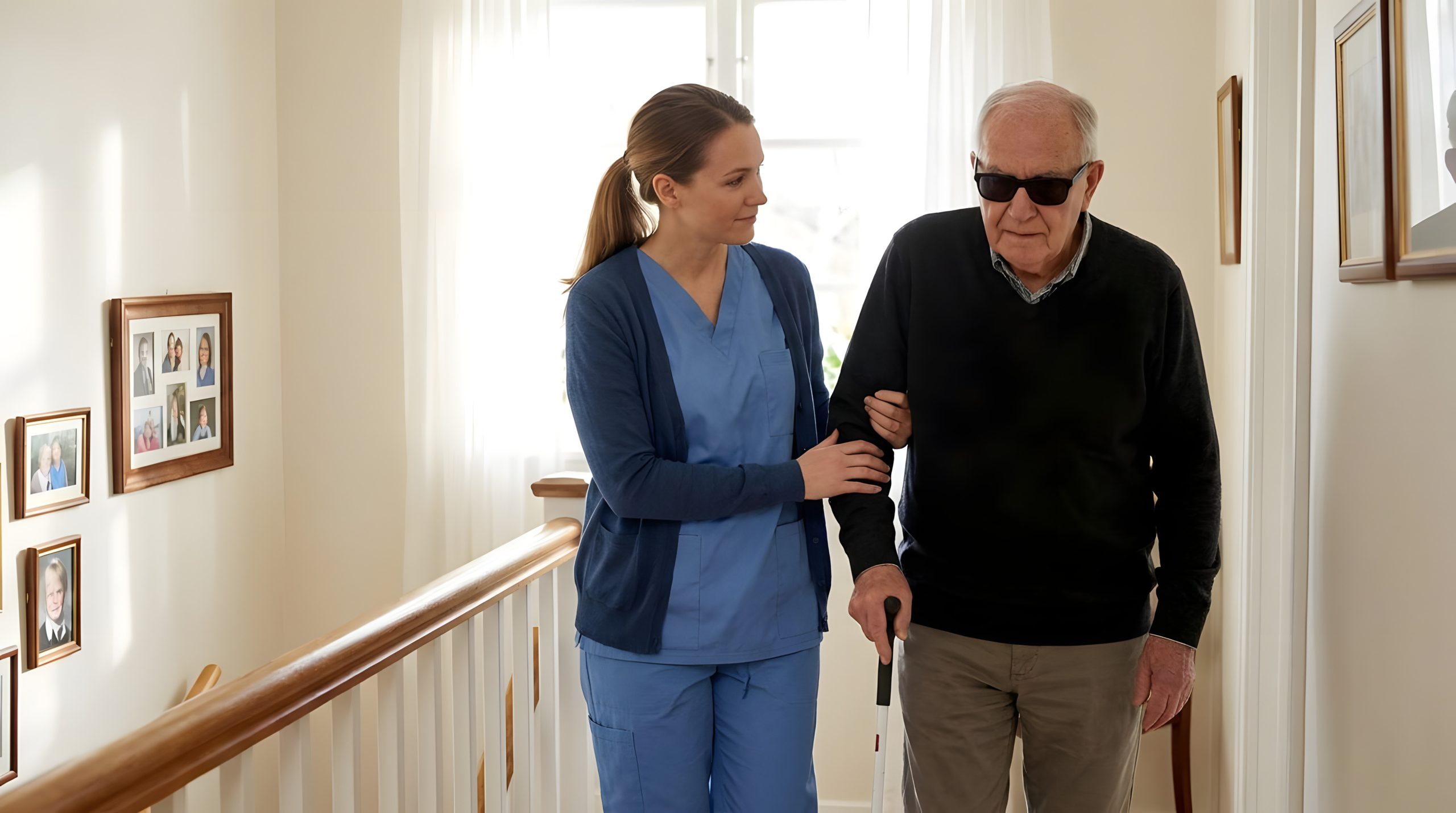
Vision loss can be dangerous for seniors and can affect other areas of their life. The CDC estimates that about 1.3 million older, vision-challenged Americans fell at least once in 2014. Since falling is among the leading injuries that sends seniors to the hospital, preventing falls is critical. Here are some ways caregivers can help:
- Leave things as you found it in their home. If something has to be moved, tell them where you have moved it.
- Be careful when cleaning the house. Cords, wet floors and a mop and bucket are all potential hazards they could trip or slip over.
- Shut doors completely or leave them fully open. A half-open door is a hazard.
- Replace light bulbs to provide them with good lighting in all the rooms, staircases, closets and hallways.
- Declutter their home and help them dispose of items that are no longer meaningful or necessary.
- Have grab bars installed in stairways and bathrooms.
- Throw rugs or cables on the floor can cause trips and falls.
March is Vision & Eye Health Awareness Month. If you’re not sure when you or your senior loved one last had an exam, make an appointment. Make sure the office is following pandemic guidelines and the trip can be made safely. If you are concerned about driving, hygiene, or fall risks, the professional caregivers at Assisting Hands Cincinnati Home Care are here to help. Give us a call to learn more.