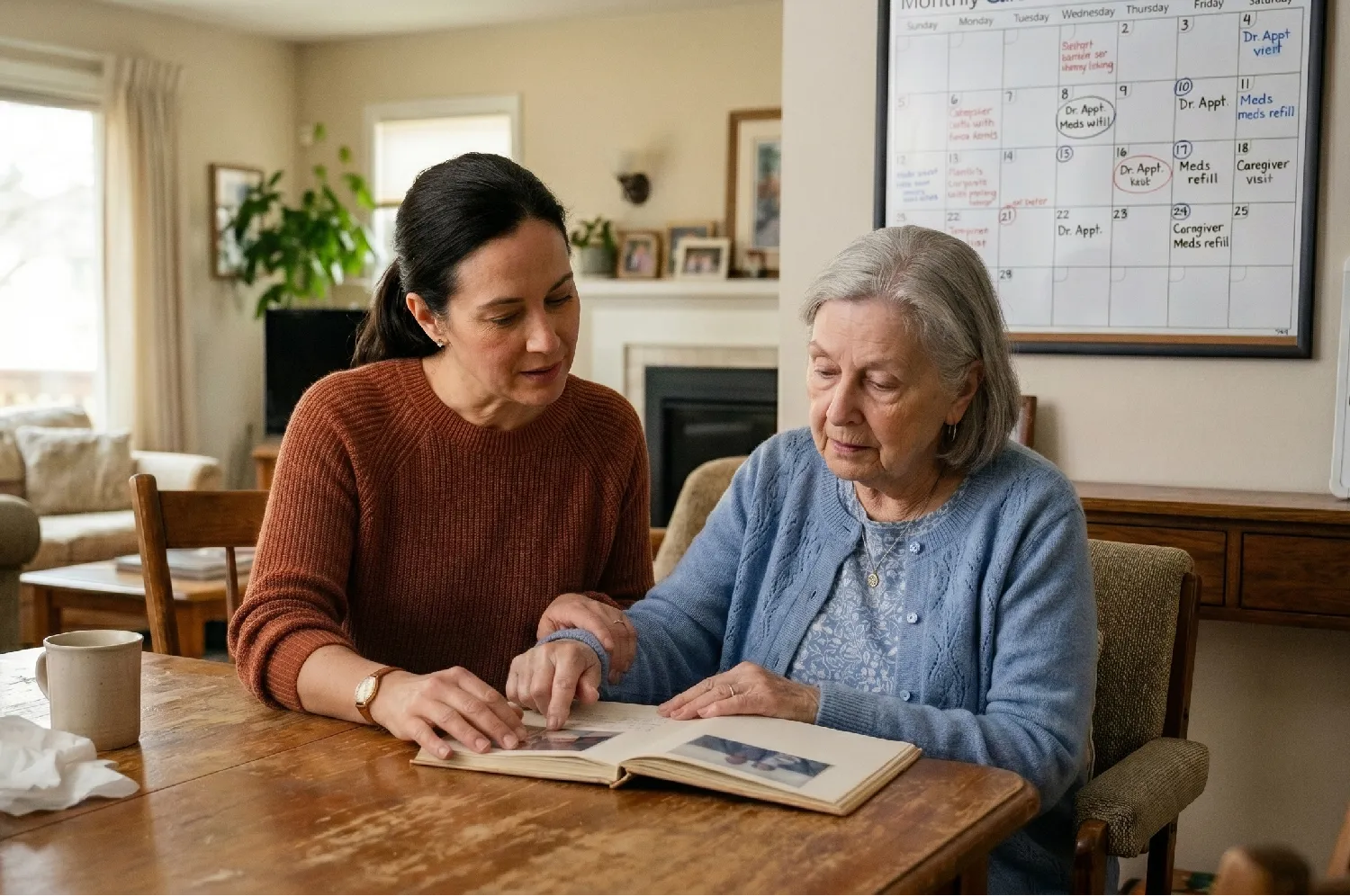
If you’re navigating dementia care, there’s a good chance you have had a moment when you thought, I don’t know how I’m supposed to keep doing all of this.
That moment is often when the conversation about building a team begins.
Most people don’t start with a team. They start by doing everything themselves. They figure it out day by day, taking on more responsibility as needs increase. Over time, it becomes heavier, more complicated, and harder to manage.
Then something happens. A fall, a hospital visit, or a situation that feels too big to handle alone. Suddenly, there’s urgency to figure out what support should look like.
But building a team doesn’t have to start in crisis. In fact, it works much better when it doesn’t.
It Starts with a Simple Question
One of the most important questions to ask early on is this: Who’s going to do what?
That question sounds simple, but it’s often where families get stuck.
There are usually two types of roles. There are the people making decisions, and there are the people carrying out the day-to-day care. Sometimes one person tries to do both, and that’s where things begin to feel overwhelming.
I’ve seen many situations where someone is willing to help but physically cannot. There was an example of a woman who was small in stature caring for her much larger husband. She loved him deeply and wanted to do everything for him. At a certain point, she simply couldn’t manage the physical side of his care anymore.
That’s not failure. That’s reality.
Moments like that are where the shift needs to happen. Instead of asking whether you should be able to do it, the question becomes who else needs to be involved.
Caring for a loved one with dementia can be challenging, but compassionate help is available. The type of home care Cincinnati seniors need can vary. Some need assistance a few hours a day, while others require more extensive around-the-clock assistance. At Assisting Hands Home Care, we tailor our care plans based on each senior’s individual care needs, and the plans can be adjusted at any time. We are a trusted provider of respite and 24-hour care, and we also offer specialized Alzheimer’s, dementia, Parkinson’s, and stroke care for seniors.
When Decision-Making Gets Complicated
Another issue families often have difficulty with is decision-making.
Many people believe having power of attorney will allow them to step in and manage things when needed. What they’re not prepared for is what happens when the loved one with dementia refuses help.
It’s very common to hear families say they had power of attorney but still couldn’t get their loved ones to accept care.
That’s because having authority on paper doesn’t always translate to real-life control. There’s a difference between having the ability to make decisions and being able to enforce them.
This is when things become frustrating and confusing. Families often find themselves in a gray area where they’re responsible for making decisions but cannot always carry them out the way they expected.
Letting Other People In
When the idea of building a team comes up, many people hesitate.
It often sounds like “This is my responsibility” or “I should be the one doing this.”
There’s a strong sense that asking for help is placing a burden on others.
The reality is that most people want to help. They simply don’t know how.
One small shift can make a big difference. Instead of asking someone to help with your loved one, ask the person to help you. That change in language matters because a lot of the support is meant to give the caregiver relief, not just assist the loved one with dementia.
Finding Roles that Fit
Building a team doesn’t mean everyone does everything. It means people contribute in ways that fit them.
There was a family with a granddaughter in cosmetology school. She wasn’t in a position to manage medications or provide full care, but she could do hair.
She began coming over to do her grandmother’s hair regularly. It became something meaningful for both of them. The grandmother felt good, the caregiver didn’t have to manage another outing, and the granddaughter found a way to be involved.
They would often take pictures together afterward. It became a positive part of the routine.
This is what building a team can look like. Not perfect, not evenly divided, but intentional.
Using What Already Works
There are also dynamics within families that can be helpful if we pay attention to them.
It’s surprisingly common for seniors with dementia to resist their own children but respond well to sons- or daughters-in-law. This happens often.
Instead of fighting that, it can be used.
If a parent will accept direction from someone else more easily, that person can take on certain responsibilities. It’s not about stepping back. It’s about working with what already makes things easier.
The Importance of Caregiver Relief
One of the clearest examples of why support matters comes from a husband caring for his wife.
At first, he didn’t want help. He felt it was his responsibility and that he should be able to handle everything on his own.
Eventually, a caregiver was brought in for a few hours a week.
Each time the caregiver arrived, he would meet her in the driveway, check in, and then leave. He used those hours to run errands, spend time outside, or simply have a break.
Those few hours became essential. They allowed him to continue caring for his wife without burning out.
Support like that isn’t about replacing the caregiving family member. It’s about sustaining the individual.
Whether you need respite from your caregiving duties or your aging loved one needs Cincinnati 24-hour home care, Assisting Hands Home Care can meet your family’s care needs. Our dedicated caregivers are available around the clock to provide transportation to doctor’s appointments, ensure seniors take their prescribed medications, and help with a variety of tasks in and outside the home.
Why Accepting Help Is So Hard
Even when support is available, accepting it can be difficult.
There’s often guilt. People feel like they should be able to handle it on their own.
There are promises that were made earlier, before the progression of the disease was fully understood.
There’s denial, where family members don’t agree on how serious things have become.
There’s also grief. Dementia involves watching someone change over time, and that brings emotional weight into every decision.
All of these factors can slow down the process of building a team even when it’s clearly needed.
Waiting Too Long
Many families wait until something forces them to act.
A fall, a hospital stay, or a safety concern brings everything to the surface at once.
At that point, decisions are made quickly and under stress. Emotions are high, and there’s little time to think through options carefully.
Planning earlier allows for a different approach. It creates space to make thoughtful decisions instead of reactive ones.
Support Can Look Different
Not everyone connects with traditional support groups, and that’s okay.
Some people benefit from talking with others in similar situations. Others prefer to learn quietly, through reading or observing.
Support might come from a conversation, a shared experience, or even following someone else’s journey.
What matters is that there’s some form of connection. No one should go through this feeling completely alone.
Small Solutions Can Make a Difference
Sometimes support comes from simple, creative solutions.
There was a woman who reliably took her medication every day because she believed someone was reminding her in person.
In reality, it was a voice assistant that had been programmed by her family.
To her, it felt like a familiar presence. That was enough.
Solutions like that don’t replace people, but they can make daily routines easier and more consistent.
Dementia care always involves two people. There’s the person experiencing the disease, and there’s the person providing care.
As abilities change, responsibilities shift. What one person can no longer do has to be done by someone else.
Trying to manage that alone isn’t sustainable.
Building a team isn’t about giving something up. It’s about creating a structure that allows both people to be supported.
The question isn’t whether you can do it alone.
It’s whether you’re meant to.
Even when families have the best intentions, caring for a senior loved one with dementia can be challenging. Fortunately, Assisting Hands Home Care is here to help. We are a leading provider of dementia care Cincinnati families can trust. You can take advantage of our flexible and customizable care plans, and our caregivers always stay up to date on the latest developments in senior care. We will work with you to create a customized home care plan that’s suited for your loved one’s unique needs. Call the Assisting Hands Home Care team today.
Want to hear more of my advice about dementia care? To join my monthly Real Talk webinar, register here.