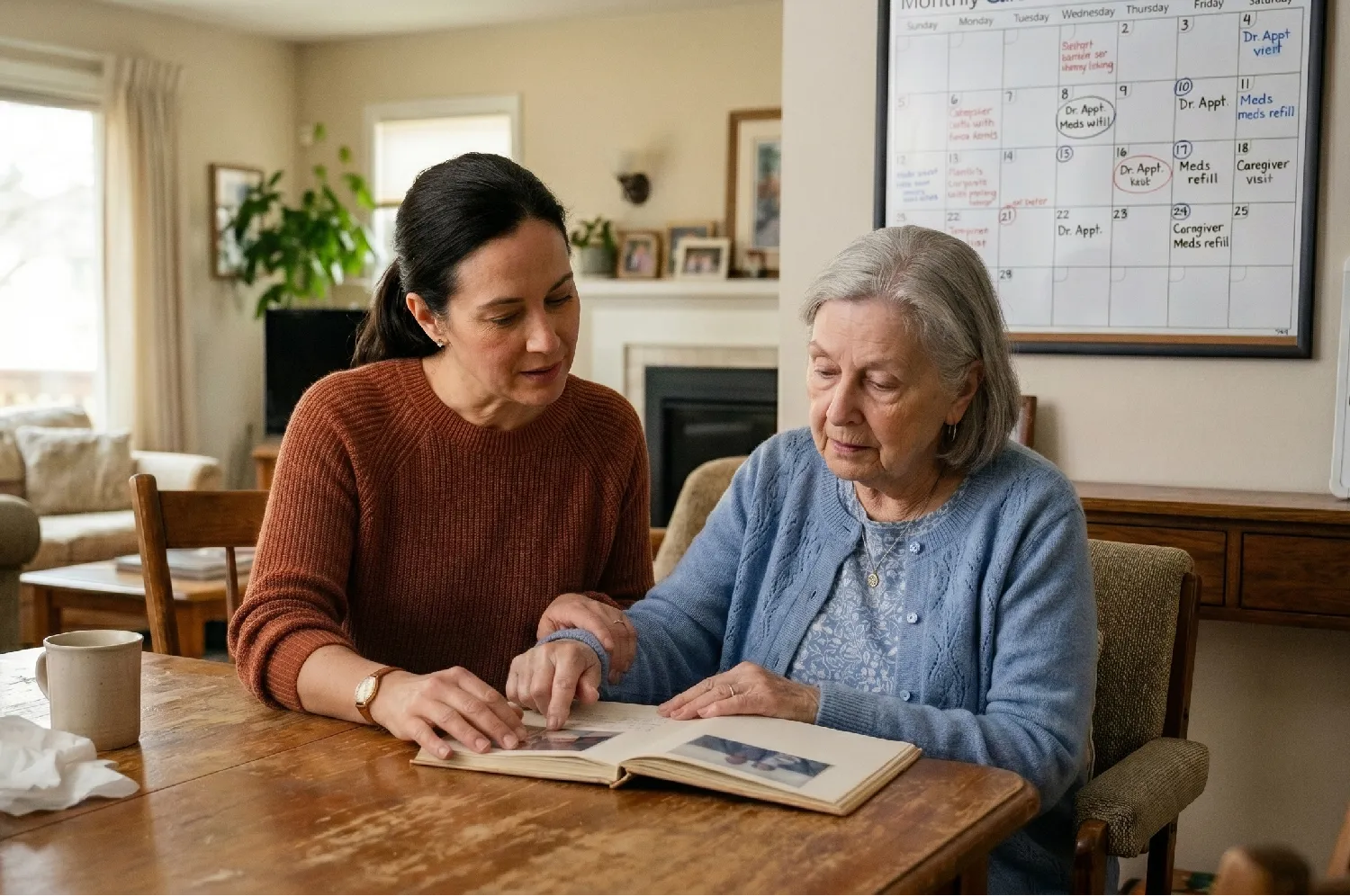
When it comes to dementia care, sometimes it takes an “uh-oh” moment to reach an “aha” moment. We try something, it doesn’t go as planned, and we realize there may be a better way. It’s a familiar experience for anyone caring for someone living with dementia.
Caregiving can be exhausting and overwhelming, especially when the needs of a loved one are constantly changing. But one thing I always remind families is that caregiving is about making choices that support both people: the person receiving care and the person providing it.
We can’t anticipate every obstacle, but the more we understand about dementia, the better prepared we are to navigate the challenges that come our way.
When Your Loved One Doesn’t Accept His or Her Diagnosis
One of the first challenges families encounter is when someone has received a dementia diagnosis but doesn’t acknowledge it. The person may attribute memory problems to normal aging, change the subject when concerns are raised, or simply not recognize anything is wrong.
Sometimes, people recognize something is changing but don’t want others to notice. They may begin isolating themselves or masking their mistakes to avoid embarrassment.
For caregivers, this can be frustrating. You know your loved one needs support, but he or she may not understand or accept why.
This is where education and understanding become so important. Rather than trying to force acceptance, we need to learn how the disease progresses and adjust our expectations along the way.
I often tell families that dementia is a journey, and you have to join it. That means walking beside your loved one rather than trying to pull him or her somewhere he or she isn’t ready to go.
Recognizing When You Need a Break
Another obstacle that doesn’t get enough attention is the caregiver’s own wellbeing.
Many family caregivers become so focused on meeting their loved ones’ needs that they overlook their own. But caregiving requires both physical and emotional energy, and nobody can provide that endlessly without support.
I encourage caregivers to ask themselves three questions: What am I physically capable of doing? What am I mentally capable of handling? And what am I willing to do?
Those answers may change over time, and that’s okay. It’s also important to recognize the people around you who want to help. We often hear friends and family say, “Let me know if there’s anything I can do.” Yet we rarely take them up on that offer.
Allowing people to help isn’t just beneficial for you. It gives them an opportunity to support someone they care about. Building a team and knowing when to rest and recharge are essential parts of the caregiving journey.
I hear caregivers describe how often people offer to help but how rarely they actually ask for anything. Think about the friend who says, “If there’s anything I can do, let me know.” That offer can become part of a real care team when you consider which responsibilities you can manage physically and mentally and which ones require a break. It also gives that friend a meaningful way to support both of you.
Whether you need respite from your caregiving duties or your aging loved one needs Cincinnati 24-hour home care, Assisting Hands Home Care can meet your family’s care needs. Our dedicated caregivers are available around the clock to provide transportation to doctor’s appointments, ensure seniors take their prescribed medications, and help with a variety of tasks in and outside the home.
Understanding Changes in Behavior
Behavioral changes can be among the most difficult aspects of dementia, particularly when someone begins acting in ways that others find hard to understand.
As caregivers, we sometimes become accustomed to these changes because we experience them every day. But when friends or extended family encounter the same behaviors, their reactions may be very different.
It’s natural to want to protect our loved ones from judgment or uncomfortable situations. However, we also have to remember the person living with dementia isn’t choosing these changes.
Dementia is progressive, and what works today may not work tomorrow. Our approach has to change along with the person we’re caring for.
One of the most important things I’ve learned is that our reactions often determine the outcome of interactions. Sometimes, going with the flow instead of insisting on our own agendas can make all the difference.
Is Living at Home Still the Right Choice?
One of the questions families ask me most often is, “How do I know when my loved one can no longer live alone?”
There isn’t always a simple answer, but I encourage families to evaluate two things: safety and quality of life.
In the early stages of dementia, preparation can help someone remain safely at home longer. This might involve changes to the person’s environment or bringing in additional support to help with everyday needs.
As dementia progresses, however, we have to look beyond whether someone is simply managing to get through the day.
Is your loved one eating nutritious meals and staying hydrated? Does he or she have opportunities for stimulation, meaningful activity, and interaction with others? Is he or she able to find purpose in daily routines?
There’s a big difference between surviving and thriving. Someone might be safe enough to remain at home but spend most of the day alone, with little activity or meaningful interaction. The person’s basic needs may be partially met, but that doesn’t necessarily mean he or she is enjoying a good quality of life.
Safety is equally important. Is your loved one making decisions that could put him or her at risk? Could he or she leave the stove on or fall while navigating the home? Would he or she know how to call for help in an emergency?
When those needs can no longer be met in the current environment, it’s time to consider additional care or a different living arrangement.
Think about someone who can still stay in his or her familiar home but is only barely meeting daily needs. Perhaps there’s some food available and occasional stimulation yet very little conversation, purpose, or activity. From the outside, it can look as though things are working because the person is getting through each day. But I ask families to look deeper: Are nutrition and hydration truly being supported? Is there physical and emotional interaction? Being safe enough to survive isn’t the same as thriving.
The safety side deserves the same careful attention. If someone turns on the oven and forgets to turn it off, moves through the house in ways that put him or herself at risk of falling, or cannot operate a phone to ask for help, the problem is more than a single mistake. We need to decide whether changes to the home and additional care can address those risks or whether another living arrangement is needed.
Aging in place can present a few challenges for seniors living with dementia. However, with professional dementia home care that offers Cincinnati families peace of mind, they can still live independently at home. Families can rely on Assisting Hands Home Care to provide their elderly loved ones with mental and social stimulation, timely medication reminders, assistance with meal prep, and much more. Our caregivers are available around the clock to help your loved one live a happier and healthier life.
When Personal Care Becomes More Challenging
As dementia progresses, personal care often becomes another turning point for families.
Tasks like bathing, dressing, and managing incontinence can require a level of assistance family members aren’t always comfortable or physically able to provide.
For example, a son may be perfectly willing to help his mother with meals, transportation, and household tasks but feel uncomfortable assisting with intimate personal care. Similarly, an aging spouse may want to provide all the necessary care but simply lack the physical strength to do so safely.
These are real challenges, and recognizing your limitations is an important part of planning for the future.
The question becomes: What can I continue doing, and where might we need additional help?
Finding Solutions to Everyday Obstacles
Beyond these larger challenges, dementia care is full of smaller obstacles that can disrupt an otherwise ordinary day. Sometimes, a little creativity and preparation can make them easier to manage.
- Getting to the doctor
If your loved one resists medical appointments, consider whether a physician or nurse practitioner can visit the home. Some families find it helpful to combine appointments into one trip rather than repeatedly asking their loved ones to leave the house.
- Losing important belongings
Imagine your mother has a black purse she carries everywhere. It’s incredibly important to her, but she frequently misplaces it and becomes distressed. One simple solution might be purchasing an identical purse. When one disappears, there’s another ready while you search for the original.
- Wandering or getting lost
I often remind families that people don’t wander until they do. Not everyone with dementia will wander, but it’s important to have a plan before it happens. Door alerts, outdoor cameras, and tracking devices can help families recognize when someone has left and provide a starting point if they need to locate him or her.
I once knew a gentleman who used outdoor cameras to determine exactly when his mother had left the house. That information established how long she’d been gone so the family could respond appropriately.
- Refusing assistance
Sometimes, the obstacle isn’t the task itself but how we’re approaching it. A person living with dementia may not recognize he or she needs help, particularly when the individual still sees him or herself as fully independent. Rather than continually offering assistance, try asking for your loved one’s help or finding ways to make him or her part of the decision.
- Changes in routine
Repeated phone calls, disrupted sleep schedules, and difficulty completing familiar activities can also create challenges. Understanding what’s behind these behaviors can help us make thoughtful adjustments rather than responding with frustration.
And whenever possible, make changes early. Introducing new routines or safety measures can become more difficult as short-term memory declines.
Consider the family that faces difficulties every time a loved one needs to leave the house for medical care. Instead of five or six separate outings, they may schedule the doctor, dentist, and foot doctor on the same day. That can still be a big trip, and it may be tiring, but it replaces repeated difficult transitions with one planned outing. For some families, physicians or nurse practitioners who visit their homes may be another workable solution.
Repeated calls, refusals, and confusing stories can also wear a caregiver down. The outline encourages families to simplify the numbers available on a phone, allow some calls to go to voicemail, and consider calling before the repeated call begins. When a loved one refuses help, asking him or her for help rather than telling him or her what must be done may work better. And when a story is inaccurate, remember that your loved one may be filling in details he or she can no longer remember because he or she still wants to participate in the conversation.
Learning to Approach Things Differently
One of the most valuable lessons in dementia caregiving is learning that we don’t always have to be right.
When someone remembers an event differently, tells a story that doesn’t make sense, or insists on something we know isn’t accurate, our instinct is often to correct him or her.
But I encourage caregivers to ask themselves a simple question: Does it matter? We don’t have to argue every point or correct every misunderstanding. Sometimes, the most compassionate thing we can do is listen, allow the person to feel heard, and respond thoughtfully.
Dementia changes how a person experiences the world. Understanding those changes allows us to approach difficult moments with more patience and less frustration.
And remember, you don’t have to figure everything out on your own. Support groups, other caregivers, and people who have already traveled this road can offer valuable lessons and practical ideas.
The more we learn, the better we can prepare. And the better we prepare, the more likely we are to turn those inevitable “uh-oh” moments into “aha” moments.
Because ultimately, overcoming obstacles in dementia care isn’t about having all the answers. It’s about being willing to learn, adapt, and continue walking beside the person you love.
As I always say, understanding the disease is how you survive it.
The type of home care Cincinnati seniors need can vary. Some need assistance a few hours a day, while others require more extensive around-the-clock assistance. At Assisting Hands Home Care, we tailor our care plans based on each senior’s individual care needs, and the plans can be adjusted at any time. We are a trusted provider of respite and 24-hour care, and we also offer specialized Alzheimer’s, dementia, Parkinson’s, and stroke care for seniors. To learn about our quality-assured services, give us a call today.
If you’d like to learn more about dementia, join me in my next Real Talk webinar, where each month I take a deep dive into one dementia-related topic. Learn more and register here.