If you’ve ever left a visit thinking “I don’t know if that went well,” you’re not alone. One of the most common things I hear from families is that visits just don’t feel the same anymore. They feel harder, more unpredictable, and sometimes even discouraging.
Part of that is because visits change as dementia progresses, but part of it is something we don’t always talk about. Visits can be emotionally heavy. You’re spending time with someone you love while also watching parts of your loved one change. There’s a level of grief in that, and it often shows up during visits.
Why Visits Feel So Different
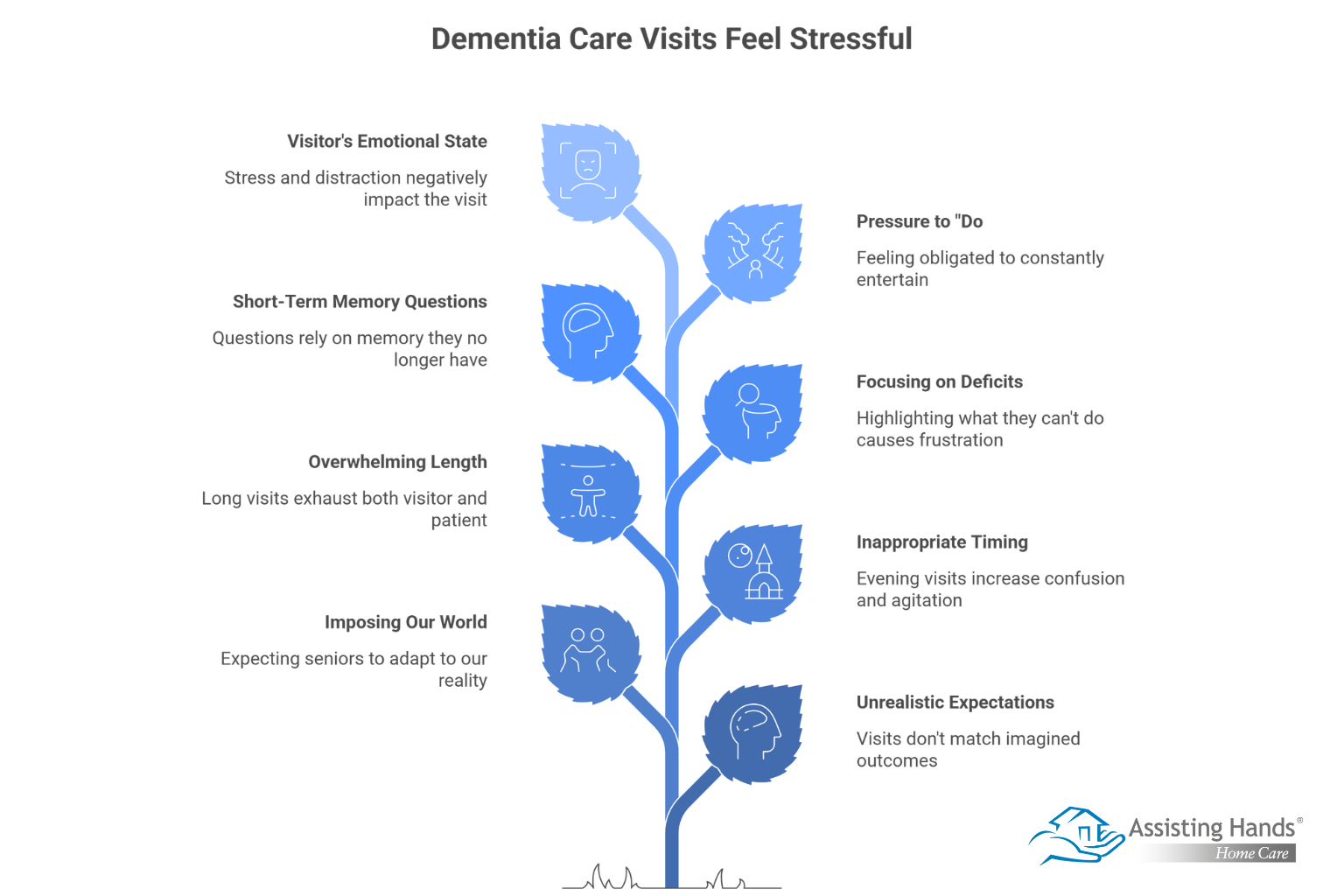
That emotional weight can lead us to walk in with expectations. We picture how the visit will go. Maybe we expect a good conversation or a smooth outing. When it doesn’t happen, it feels like something went wrong. In reality, dementia is unpredictable. You don’t always know what you’re going to get that day.
One of the most helpful shifts is to let go of those expectations and allow the visit to be what it is.
Meeting Our Loved Ones Where They Are
Another important adjustment is understanding that we often have to go into our senior loved ones’ world rather than expecting them to stay in ours. We naturally want to correct things, remind them, or guide the interaction the way we’re used to.
With dementia, that can create frustration. Instead, meeting them where they are, even if it doesn’t feel logical, often leads to a calmer and more successful visit.
A professional dementia caregiver with training and experience in communicating with dementia patients can be a wonderful asset for your whole family. Certain age-related conditions can make it more challenging for older adults to age in place safely and comfortably, but experts in 24-hour home care for Cincinnati seniors are available around the clock to help aging adults manage their health. Whether your loved one is living with dementia or recovering from a stroke, you can trust the professional caregivers from Assisting Hands Home Care to enhance his or her quality of life.
How Timing and Length Matter
Timing plays a bigger role than most people realize. Many visits happen in the evening because it fits into most people’s schedules, but that’s often when confusion or agitation is at its highest for dementia patients. I’ve seen families who had difficult visits over and over again at night, and when they switched to visiting earlier in the day, the entire experience changed.
The length of visits matters too. It’s common to feel like you should stay for a long time, but longer visits can actually be overwhelming for both people. Shorter visits done more consistently often lead to better interactions and less emotional strain.
Focusing on What Your Loved One Can Still Do
When it comes to what to actually do during a visit, many people focus on what their loved ones can’t do anymore. They can’t cook, they can’t manage things, they can’t follow steps like they used to. While that may be true, it doesn’t mean your loved one can’t participate at all.
A good example is cooking. You loved one may not be able to follow an entire recipe, but he or she can still be involved in part of it. If everything is set up for your loved one, he or she might be able to measure ingredients or mix something in a bowl. Instead of removing the activity, you adjust it. Your loved one does the part he or she can do, and someone else fills in the rest.
Aging in place can present a few challenges for seniors living with dementia. However, with professional dementia care that offers Cincinnati families peace of mind, they can still live independently at home. Families can rely on Assisting Hands Home Care to provide their elderly loved ones with mental and social stimulation, timely medication reminders, assistance with meal prep, and much more. Our caregivers are available around the clock to help your loved one live a happier and healthier life.
Rethinking Conversation
We often ask questions that rely on short-term memory, like “What did you do today?” or “Did you eat?” For someone with dementia, those questions can be difficult or impossible to answer. It can create frustration right away.
Instead, using long-term memory tends to work better. Talking about past experiences, familiar topics, or things he or she has always known allows your loved one to engage more naturally.
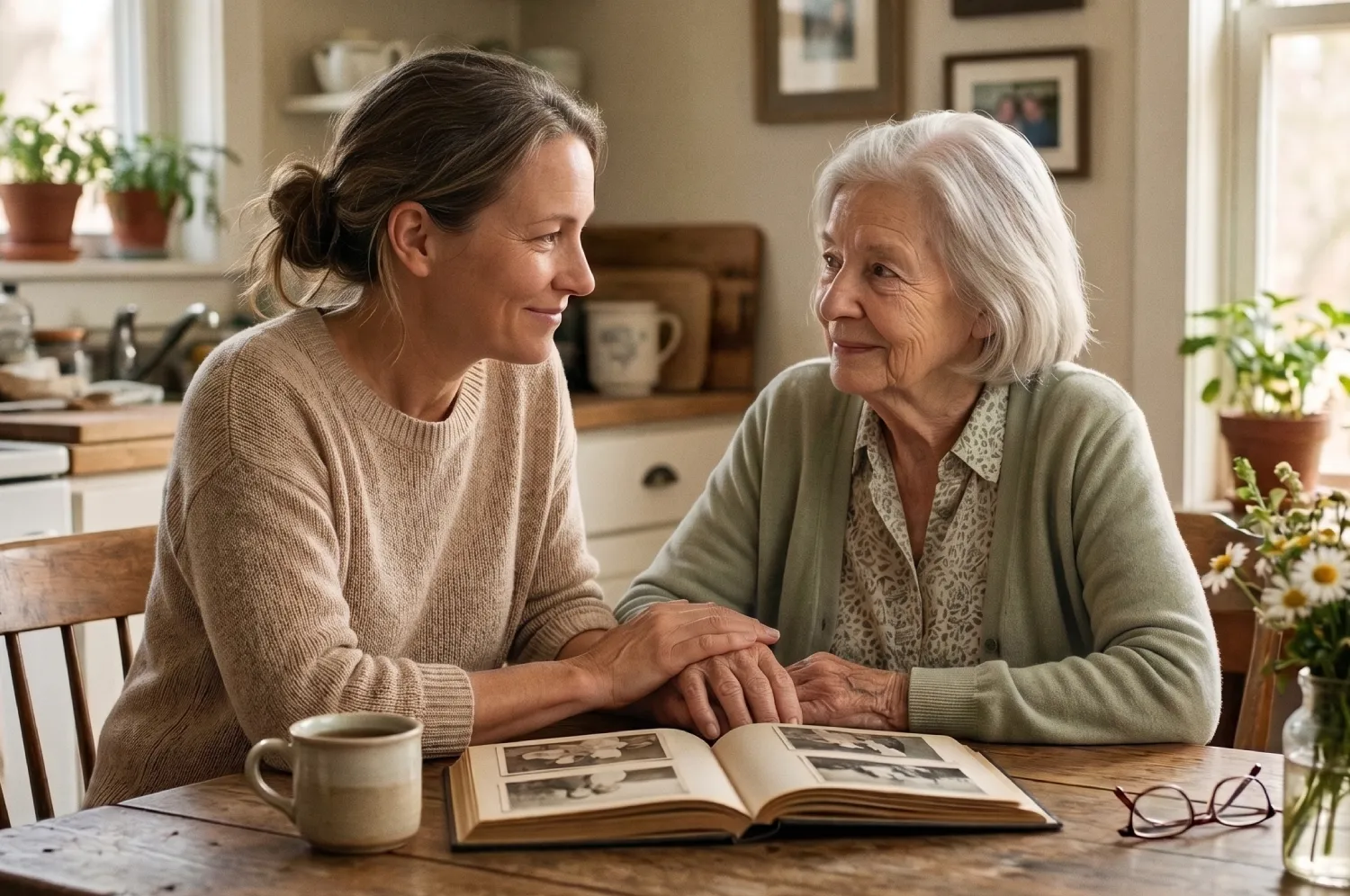
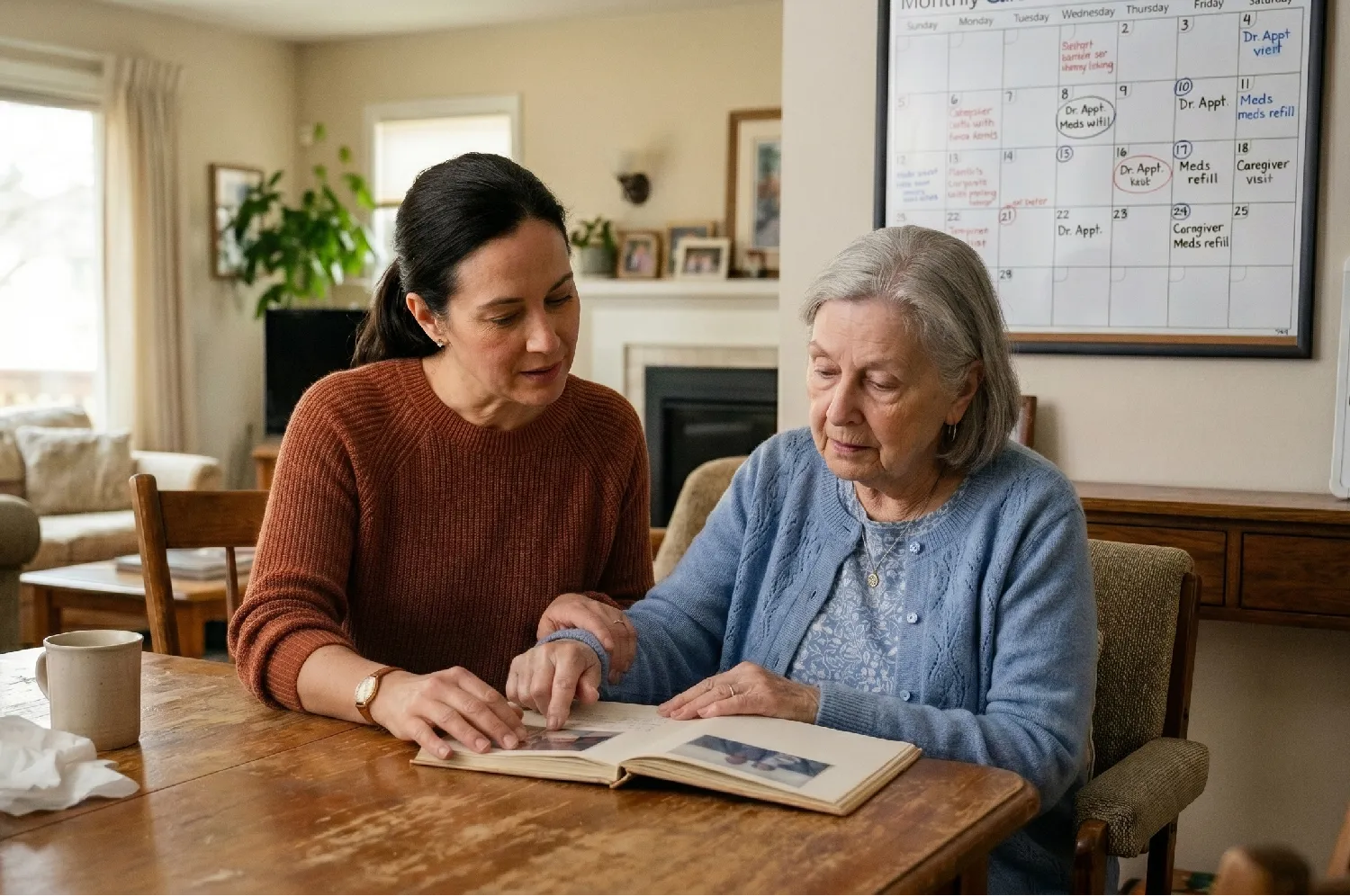
Photos are another example. Showing recent pictures of people your loved one may not recognize usually leads to surface-level responses. Your loved one might say something looks nice but can’t connect to it. When you use older photos tied to long-term memory, the interaction often changes. Your loved one can tell stories, remember details, and engage in a more meaningful way.
Why You Don’t Always Have to “Do” Something
It’s also worth reconsidering the idea that you always need to be doing something. Many people feel pressure to fill the visit with conversation or activity. While that can be a good technique, it isn’t always necessary.
Sitting together, listening to music, going for a drive, or being outside can create connection without needing constant interaction. Sometimes just being present is enough.
Why Visits Still Matter
One of the hardest questions people ask is whether visits matter if their loved ones don’t remember them. You might hear things like “You haven’t been here in days,” even if you were just there. That can feel discouraging.
But the visit still matters. You know you were there, and your presence still has an effect. Even without memory, people with dementia still respond to familiarity, tone, and emotion. You become a source of comfort and safety, even if your loved one can’t explain it.
Your visit can break up loneliness or confusion in that moment, and that has value.
Your Role in the Visit
It’s also important to remember your own energy plays a role. Behavior is often mirrored. If you walk in rushed, stressed, or distracted, that can carry into the interaction. If you come in calm and present, it often helps the visit feel more settled.
Some families even find bringing another person with them changes the dynamic and makes the visit feel easier for everyone.
Making the most of a visit isn’t about finding the perfect activity or saying the right thing. It’s about adjusting your expectations, focusing on what’s still possible, and meeting your loved one where he or she is now.
Dementia changes what visits look like, but it doesn’t take away the need for connection. It just asks us to approach that connection differently.
Regular visits from friends and family members can reassure and calm aging loved ones who have dementia. Caring for a loved one with dementia can be challenging, but compassionate help is available. If your senior loved one has been diagnosed with a serious condition and needs help with tasks like meal prep, transportation, medication reminders, bathing, and grooming, reach out to Assisting Hands Home Care, a leading provider of Cincinnati senior home care. We also offer comprehensive care for seniors with dementia, Alzheimer’s, and Parkinson’s. Call the Assisting Hands Home Care team today.
Want to hear more of my dementia advice? To join my monthly Real Talk webinar, register here.