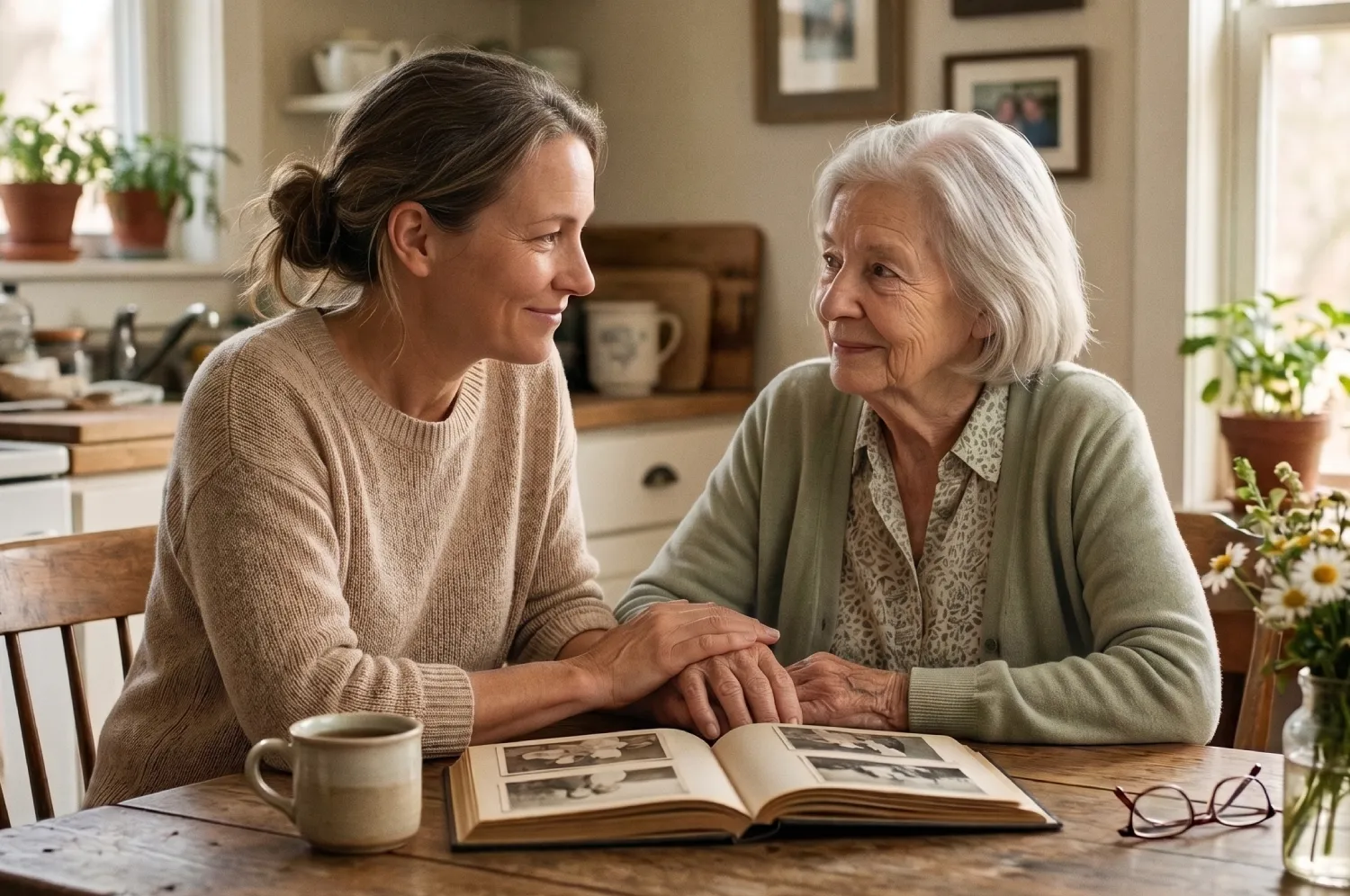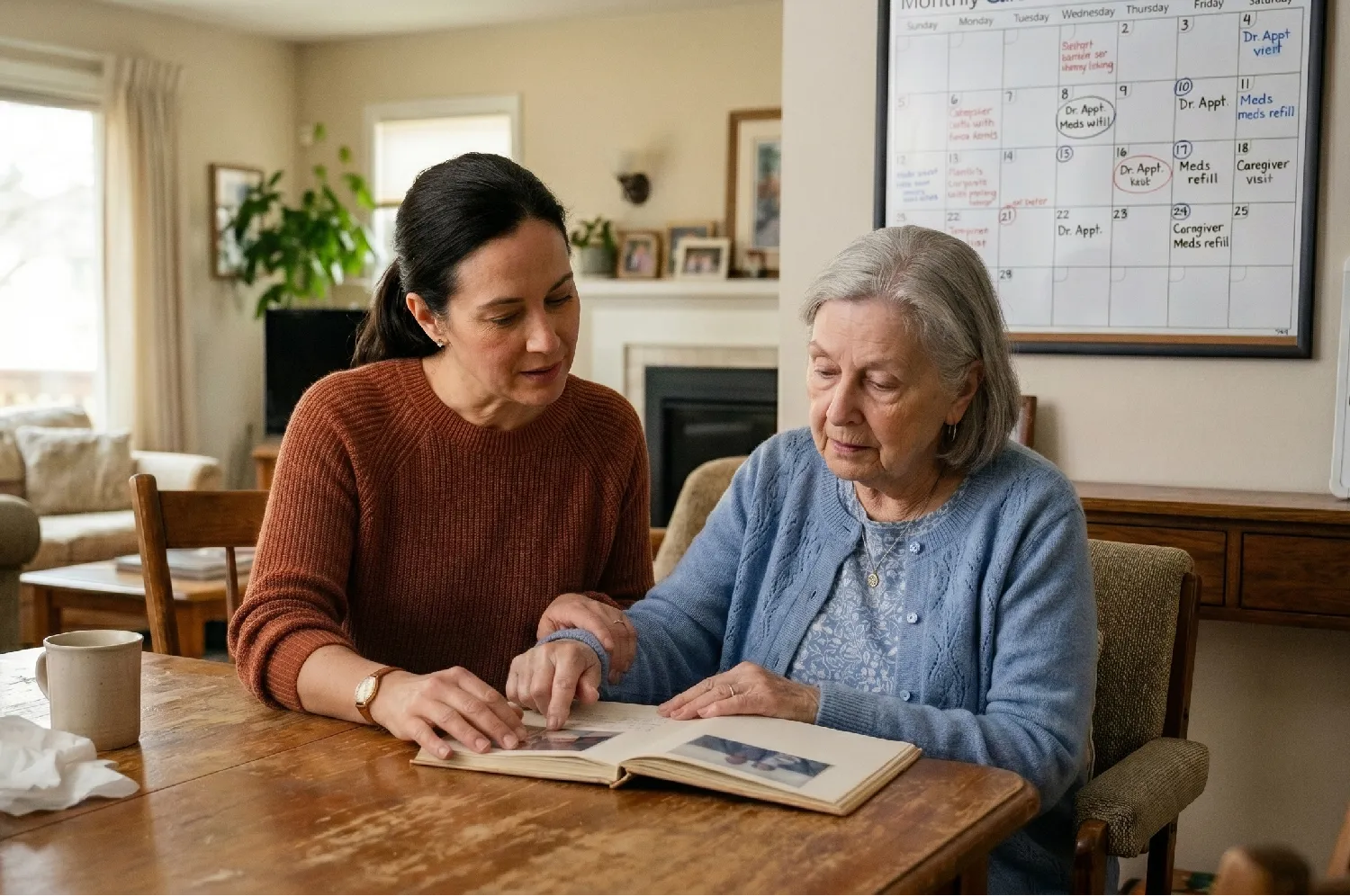
If you love someone living with dementia, you already know this journey takes strength, humor, and a whole lot of heart. It’s confusing, it’s exhausting, and sometimes it feels like you’re figuring it out one minute at a time.
I’ve spent years in dementia care, walking alongside families and caregivers who are learning how to love through change. So let’s talk about what’s really happening as dementia progresses and how you can take care of your loved one and yourself through it all.
Understanding Dementia’s Progression
Alzheimer’s and other dementias are brain failure. It’s not a personality change or stubbornness. It’s the brain literally losing its ability to manage memory, logic, and emotion in the ways it used to.
Everyone’s timeline is different. Some people live many years with dementia, while others progress more quickly. What matters most isn’t the number of years but the quality of life within them. Each stage brings its own moments of clarity, joy, and connection.
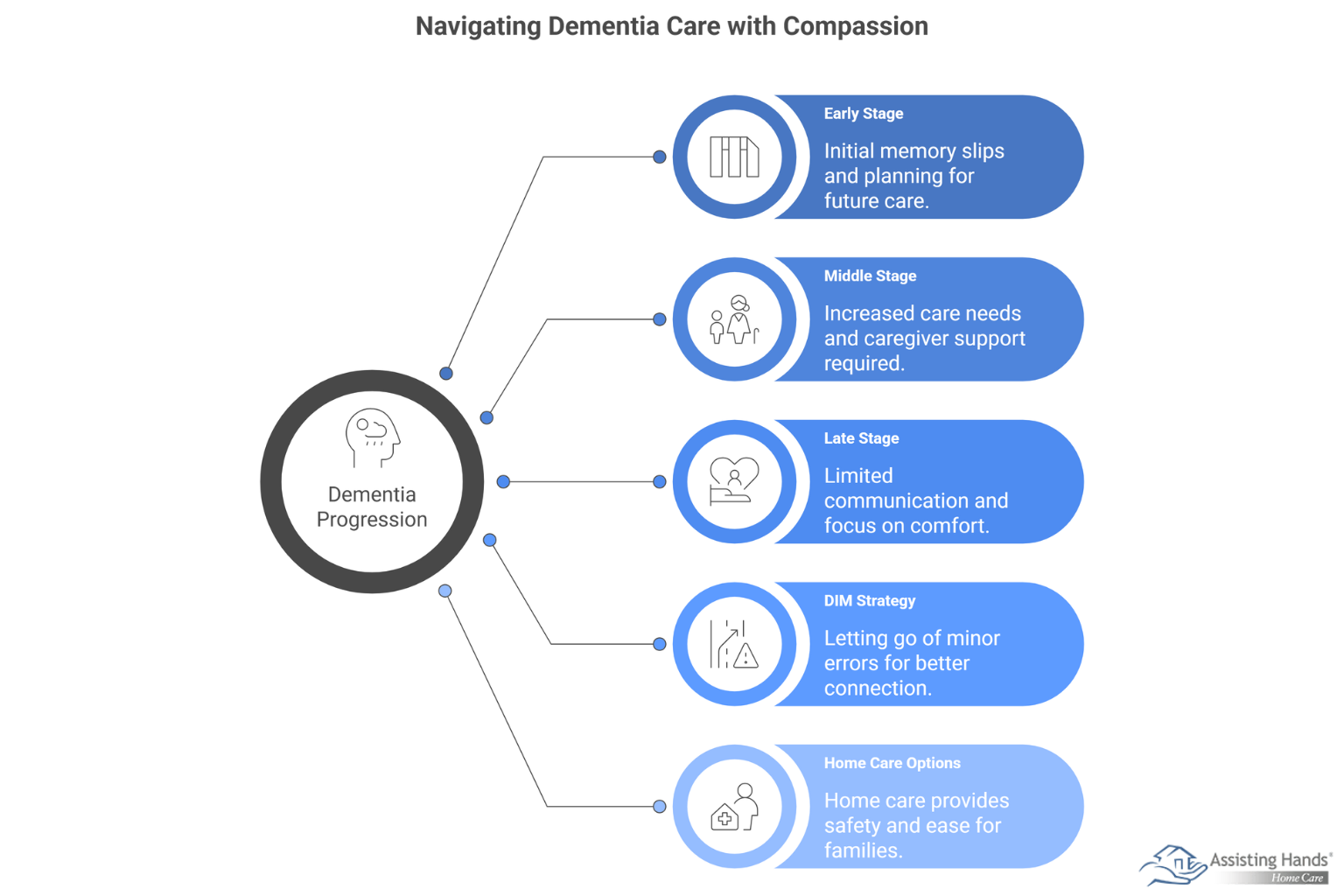
Early Stage: The “Something’s Not Right” Phase
This is usually where it starts: small memory slips, misplaced keys, a bill that didn’t get paid. Maybe your loved one forgets the word for remote or repeats a question you just answered. You feel a gut twinge that something is changing.
At this stage, people can still live independently, and it’s the perfect time to plan ahead. Sit down together to discuss medical care, finances, and wishes for the future. It’s also a time to simplify routines with fewer choices, more structure, and less rushing.
I remember one family telling me their dad started hiding things so no one could steal them, but then he forgot where he hid them. We had a good laugh, but it reminded them that labeling drawers and keeping things in the same place every day could make a world of difference.
And please, find ways to laugh. Humor and patience are two of your biggest caregiving tools.
Middle Stage: When It Gets Real
This stage is where most caregivers start to feel the weight of dementia care. Memory lapses become more noticeable, moods change, and your loved one may need help dressing, eating, or managing daily tasks.
It’s also where you realize caregiving is a marathon, not a sprint. You’ll try things that don’t work, learn to pivot, and slowly figure out what helps your loved one feel calm and capable.
One daughter I worked with prepped her mom’s morning coffee setup: cup, spoon, and creamer ready to go. Her mom could still make her coffee and feel independent because the steps were laid out clearly. That’s the kind of small adjustment that preserves dignity and lowers frustration.
This is also the stage to start asking for help. You can’t do this alone. Bring in support, whether that’s family, friends, or professional home care in Cincinnati. A professional caregiver can help with bathing, meal prep, and safety supervision so you can rest, run errands, or just take a breath.
Caregiver burnout is real, and you can’t pour from an empty cup. Take breaks. Eat lunch sitting down. Step outside. You’re allowed to care for yourself, too.
If you’re the primary caregiver for a senior family member and you need respite care in Cincinnati, Assisting Hands Home Care is here to help. Our home caregivers are trained to assist older adults with a wide variety of everyday tasks, including meal prep, physical activity, and personal hygiene. We also provide 24-hour care and specialized care for seniors with Alzheimer’s, dementia, and Parkinson’s.
Late Stage: When Everything Changes
In the later stages, communication becomes limited, and your loved one may not recognize familiar faces. It’s painful, but this is also a time when simple moments mean everything.
Even without words, people with dementia respond to emotion. They recognize tone, touch, music, and rhythm. I once saw a daughter sit beside her dad every night and hum an old tune he used to sing to her. He couldn’t speak, but his breathing slowed and his shoulders relaxed every time. That’s connection.
This is when comfort becomes the focus. You may want to consider outside help like home care services. Professional caregivers can provide incredible support, helping families maintain dignity and peace at home or in a care setting. Finding outside help, from a professional caregiving company or from family, isn’t about giving up. It’s about choosing quality of life and comfort over chaos.
Maintaining a high quality of life can be challenging for some seniors, but professional caregivers can help them attain this goal. Families looking for top-rated home care providers can reach out to Assisting Hands Home Care Cincinnati. From respite care to specialized Alzheimer’s, dementia, stroke, and Parkinson’s care, there are many ways we can make life easier for seniors and their loved ones.
“DIM”: Does It Matter?
This is one of my go-to sayings: DIM, Does It Matter?
You’ll be tempted to correct your loved one when he or she is wrong. You’ll want to remind your loved one it’s 2025, not 1980. But here’s the thing: if it doesn’t matter, let it go.
If Mom says she has to pick up the kids from school, you can just smile and say “They’re already home safe.” It’s not lying, it’s loving.
Less talking, more listening. Fewer corrections, more connection. It’s not your loved one’s fault. It’s brain failure. Your loved one isn’t trying to frustrate you but trying to find his or her way through a world that keeps shifting.
What’s Next and Where to Turn
As dementia progresses, care needs grow. That’s when home care can step in to make life safer and easier for everyone involved.
Some families in Cincinnati bring in home care for a few hours a week, while others need daily support for personal care, companionship, or help with household tasks. Assisted living and memory care communities can also provide structure and social engagement when staying home isn’t possible.
When the time comes to focus on comfort, hospice care can provide guidance and relief medically, emotionally, and financially. You’ll have a full team behind you, and you’ll never have to walk that path alone.
Final Thoughts
If you’re caring for someone with dementia, please hear this: you’re doing one of the hardest and most meaningful things a person can do. You’re showing love through patience, exhaustion, and uncertainty. You’re doing better than you think.
At Assisting Hands Home Care Cincinnati, we know how demanding dementia care can be. Our professional caregivers are trained to provide compassionate, respectful support for your loved one and for you. Whether you need help for a few hours a day or ongoing 24-hour care, we’re here to make sure no caregiver in Cincinnati ever feels alone in this journey.
If you’re wondering what’s next, let’s talk. Together, we can make this stage of life safe, meaningful, and filled with care that comes from the heart.
Aging in place can present a few challenges for seniors living with dementia. However, with professional dementia care that offers Cincinnati families peace of mind, they can still live independently at home. Families can rely on Assisting Hands Home Care to provide their elderly loved ones with mental and social stimulation, timely medication reminders, assistance with meal prep, and much more. Our caregivers are available around the clock to help your loved one live a happier and healthier life. To learn about our high-quality in-home care plans, call us today.