Caring for a senior loved one with dementia can feel like driving with a GPS that recalculates every few minutes. Just when you think you know the route, something changes, and you adjust again. Most families don’t set out to become caregivers. They arrive there through love, obligation, or a promise made years earlier, often without realizing how complex the road of dementia care and senior care will become.
Sooner or later, almost every caregiver asks the same question: Is this normal aging, or is something not right?
That question matters. Not because a diagnosis changes who your loved one is but because timing changes what’s possible. Many medications are designed for the earliest stages of cognitive change, when slowing progression is still an option. Too often, families miss that window because they wait, hoping what they’re seeing is “just aging.” At the same time, getting in to see a neurologist can take nine to 12 months. The goal, then, isn’t panic. It’s preparedness, especially for families navigating home care or homecare services for the first time.
Normal Aging vs. Aging that Isn’t Normal
One comparison tends to stick with families once they hear it. Normal aging can look like forgetting where you put your car keys. Aging that isn’t normal looks like forgetting what the car keys are for. That difference between misplacing something and losing its meaning is subtle at first. It often shows up in quiet moments, the kind families notice long before anyone else does.
Normal aging is usually about slowness, not failure. Thinking can be slower. Movement can be slower. Finding the right word can take longer. If you’re not used to seeing it, that slowness can feel alarming.
You tell your aging parent something simple—maybe the Reds won last night—and he or she pauses, staring off for a moment. It’s easy to interpret that pause as a warning sign. But often, it’s just processing: Was there a game? Is it still baseball season? Who even plays for the Reds now?
Simple Communication Tips that Help at Home
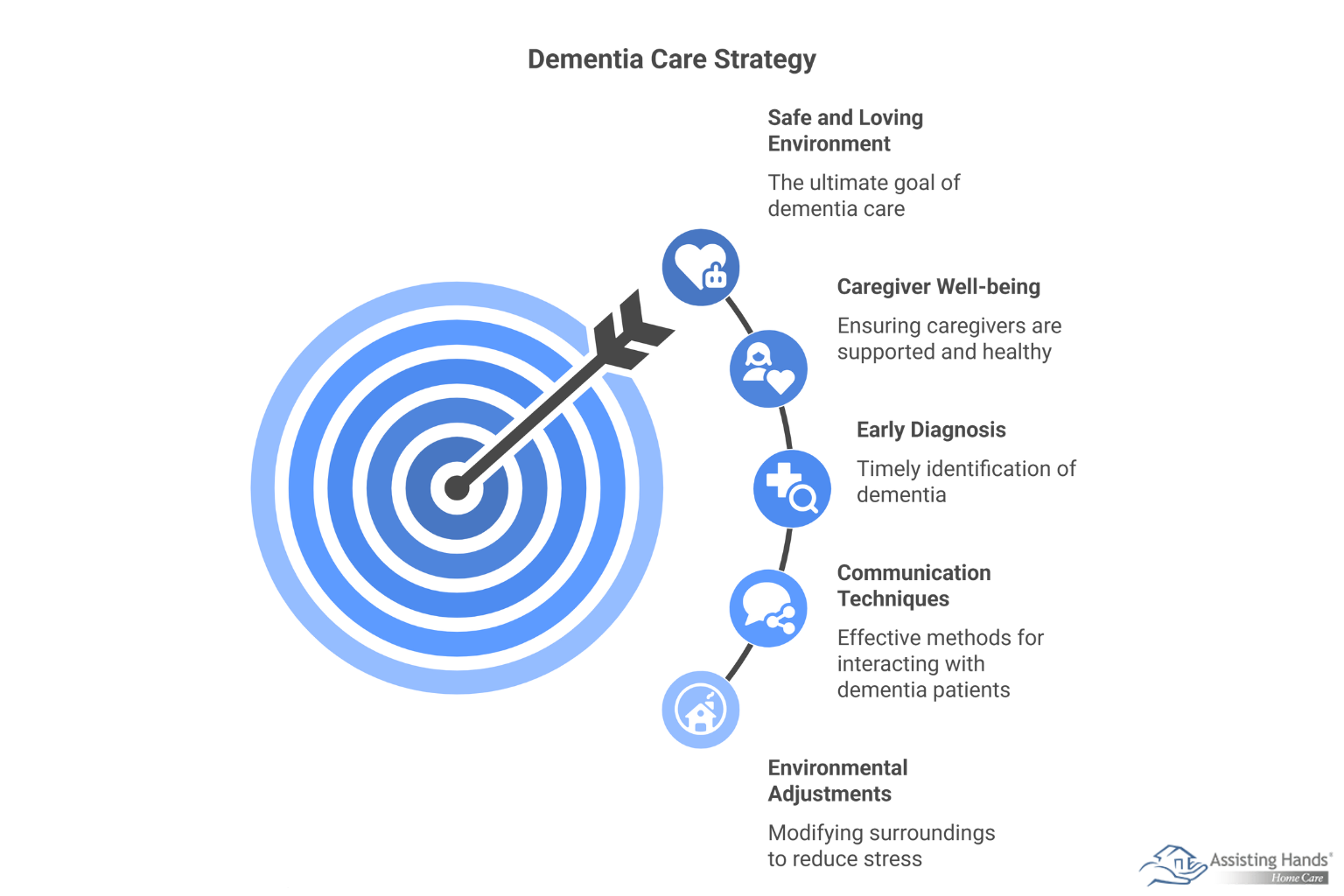
In those moments, silence can be a gift. One of the most effective techniques is almost laughably simple: count to 10 silently. Let the word come. Resist the urge to rescue the conversation. Many older adults know exactly what they want to say—it just takes longer to get there.
Word-finding difficulties can be part of this too. You may hear a lot of “you know … you know …” as your loved one circles around the idea he or she is trying to express. Jumping in too quickly with the answer can leave your parent feeling rushed or embarrassed. Giving time first matters. If your loved one is truly stuck, gentle cues like a category, a first letter, or a related idea are often more supportive than supplying the word outright.
Even introductions can become stressful. Giving your loved one a little context can reduce pressure for everyone involved: “Mom, this is Jan’s son. You and Jan know each other from church.” That isn’t babying or talking down. It’s support, and it’s a common strategy used by experienced dementia home care providers.
Even when families have the best intentions, caring for a senior loved one with dementia can be challenging. Fortunately, Assisting Hands Home Care is here to help. We are a leading provider of dementia care Cincinnati families can trust. You can take advantage of our flexible and customizable care plans, and our caregivers always stay up to date on the latest developments in senior care.
Hesitation, Overwhelm, and the Environment
Some older adults also become more hesitant in how they move through the world. Crowds, noisy restaurants, or unfamiliar environments can feel overwhelming as their brains take longer to sort those stimuli. The slowness may be physical, or it may come from a fear of getting into situations they no longer feel confident navigating.
When you notice that hesitation, shaming it rarely helps. Adjusting the environment often does. Quieter times, simpler layouts, and calmer settings can restore a sense of control. Sometimes comfort brings confidence back, something families and senior care professionals see often in day-to-day home care.
Warning Signs that May Point to Dementia
Caregivers tend to help their loved ones best when they watch patterns rather than isolated moments. The classic warning signs that deserve attention include memory loss, difficulty performing familiar tasks, language problems, disorientation to time or place, poor judgment, trouble with abstract thinking, misplacing items, changes in mood or personality, and a loss of initiative. Seeing several of these at once or one that’s clearly worsening is usually a signal to involve a clinician.
It’s also important to remember not every concerning change is dementia. Hearing loss, stress, new illnesses, medication side effects, or untreated pain can all mimic cognitive decline. That uncertainty is exactly why getting checked out matters, particularly for families coordinating home care in Cincinnati and surrounding areas.
When It’s Not Just Slower
There’s often a point where caregivers say “This isn’t just thinking slower. This is different.” Abnormal aging may look like an inability to think the same way, an inability to do things that once came naturally, or an inability to get started at all.
One moment that surprises families is when a loved one still can do something physically but can’t initiate it. Your loved one may be able to brush his or her teeth or eat a meal yet sit frozen, unsure how to begin or unable to sequence the steps. At that stage, caregiving shifts. It becomes less about doing everything for your loved one and more about setting him or her up to succeed, a core principle in high-quality dementia home care.
A helpful principle is “Do with, not for.” Instead of taking over, you place the toothbrush in your loved one’s hand. You put the toothpaste on it. You start the first step together. Simple one-step cues can protect function longer and reduce frustration on both sides.
Repeating Questions and Getting Stuck in Time
Another common frustration is repeating questions. For example, “What day is it?” asked again and again can wear even the most patient caregiver down. It often feels like your loved one isn’t listening, but repetition usually reflects anxiety and disorientation, not stubbornness.
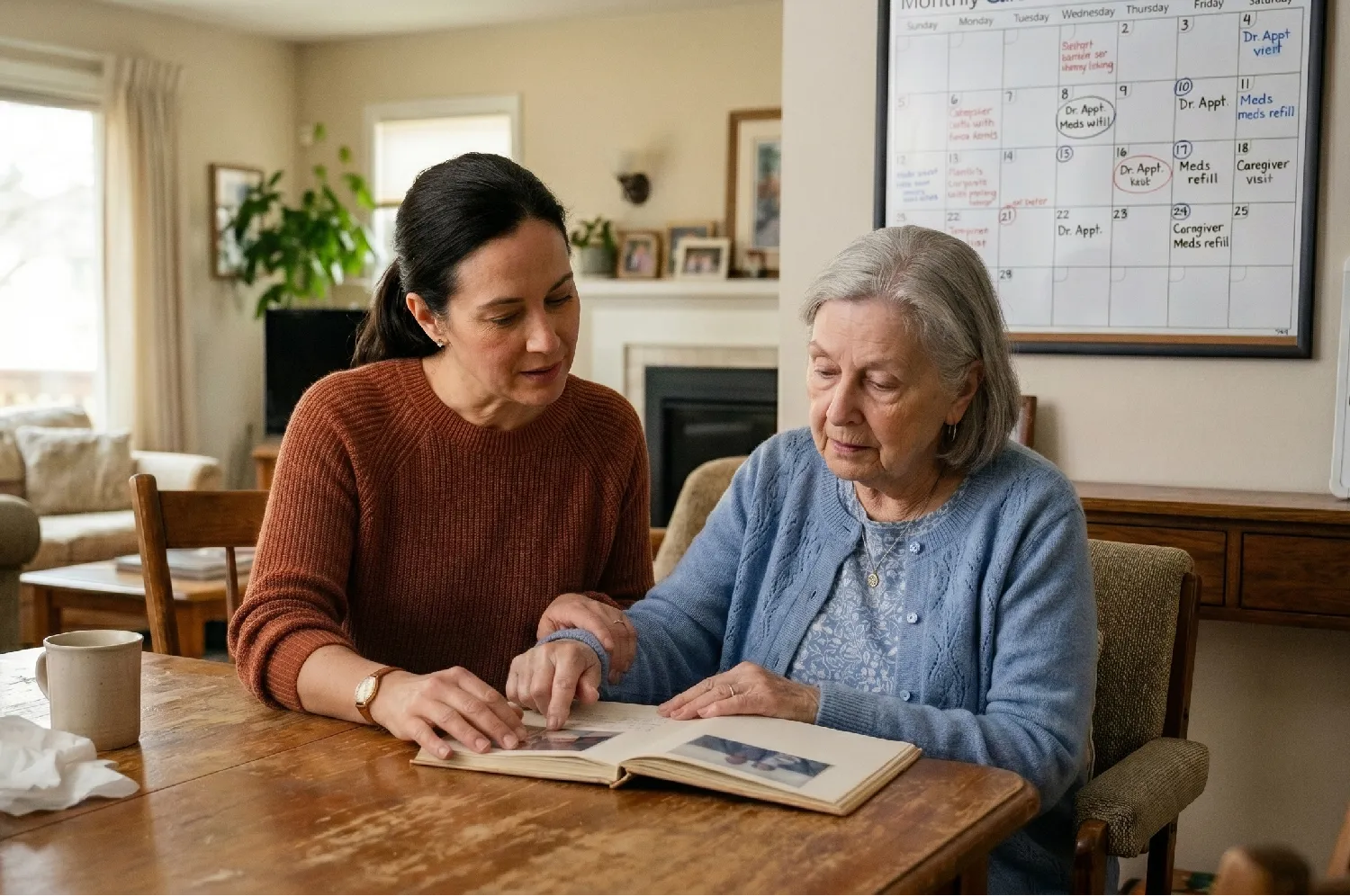
Tools that match the stage can make a real difference. Early on, a talking watch or clock may help. Later, a calendar you mark off together can ground your parent. Eventually, a simple board at home that shows just the day may be enough. Instead of answering the same question with growing irritation, you build a system that answers it gently, over and over, without fighting the brain.
Validation and Redirection
Confusion between past and present is often where logic stops working altogether. Families try to correct with facts, hoping to pull their loved ones back into reality, and everyone ends up upset. Validation and redirection tend to work better. This means meeting your loved one where he or she is emotionally rather than insisting he or she come to you cognitively.
Validating doesn’t mean agreeing with false beliefs. It means acknowledging fear, longing, or worry first, then redirecting toward comfort, routine, or a simple next step. It isn’t lying. It’s choosing peace over a battle no one can win.
The Caregiver Habit that Changes Everything
One of the most powerful things caregivers can do is become their own record keepers. Establish a baseline. Write things down. Ask others what they’re noticing. Start early. It can be easy to see your loved one’s off day as a sign of decline and start to worry, but trends matter most. Notes help clinicians see what you see and turn vague concern into a meaningful timeline.
Tracking doesn’t have to be complicated. You can type notes into your phone. What happened? When did it happen? How was it different from what’s usual? Were there triggers like stress, illness, new medications, pain, or hearing problems? What helped—rest, cues, or a quieter environment?
Families are often surprised to learn that “getting checked out” isn’t one single test. Evaluation can include quick cognitive screenings, blood tests that look at emerging biomarkers, imaging such as MRI or PET scans, spinal fluid testing, genetic risk testing, and in-depth neuropsychological evaluations that assess how changes affect daily function. Each layer adds information, and not every step is necessary for every person.
Supporting Your Loved One and Yourself
What caregivers don’t always say out loud but need to hear is that caregiving is a two-person relationship. Your loved one’s needs matter, and so does your capacity. You can love deeply and still need help. You can be devoted and still get exhausted. That doesn’t mean you’re failing. It means you’re human. Many of the small strategies above are the same ones used in professional home care and senior care to reduce stress and prevent caregiver burnout.
If what you’re seeing feels like more than aging, don’t carry it alone in your head. Write it down. Build a baseline. Ask others what they see. Start early. And when the day-to-day gets hard, return to the tools that protect dignity: give time, cue instead of correct, validate and redirect, and do with, not for.
Good dementia care isn’t about winning arguments with the brain. It’s about helping your loved one feel safe in the day he or she is having and helping your family make it through the journey with love intact.
Certain age-related conditions can make it more challenging for older adults to age in place safely and comfortably, but experts in live-in care for Cincinnati seniors are available around the clock to help aging adults manage their health. Whether your loved one is living with dementia or recovering from a stroke, you can trust the professional caregivers from Assisting Hands Home Care to enhance his or her quality of life. We will work with you to create a customized home care plan that’s suited for your loved one’s unique needs. Call the Assisting Hands Home Care team today.