Dementia affects millions of people worldwide, leaving families wondering whether they might be at risk, too. While age and lifestyle factors significantly influence dementia development, genetics also play a crucial role in determining who might face this condition later in life.
The Genetic Foundation of Dementia
Genetics contribute to dementia risk through several mechanisms, but the relationship isn’t straightforward. Scientists have identified numerous genes that influence susceptibility to various forms of dementia, including Alzheimer’s disease, vascular dementia, and frontotemporal dementia.
Research shows genetics account for approximately 60 to 80 percent of Alzheimer’s disease risk, making it one of the most heritable complex diseases. However, having genetic risk factors doesn’t guarantee someone will develop dementia—it simply increases the likelihood compared to those without these variants.
For reliable Alzheimer’s care Cincinnati families can rely on, turn to Assisting Hands Home Care. We are a leading provider of professional memory care designed to help seniors maintain a higher quality of life. In addition to Alzheimer’s care, we also provide comprehensive dementia, Parkinson’s, and stroke care. From revolutionary care programs to compassionate and dedicated caregivers, we can meet all of your Alzheimer’s care needs.
Types of Genetic Risk Factors
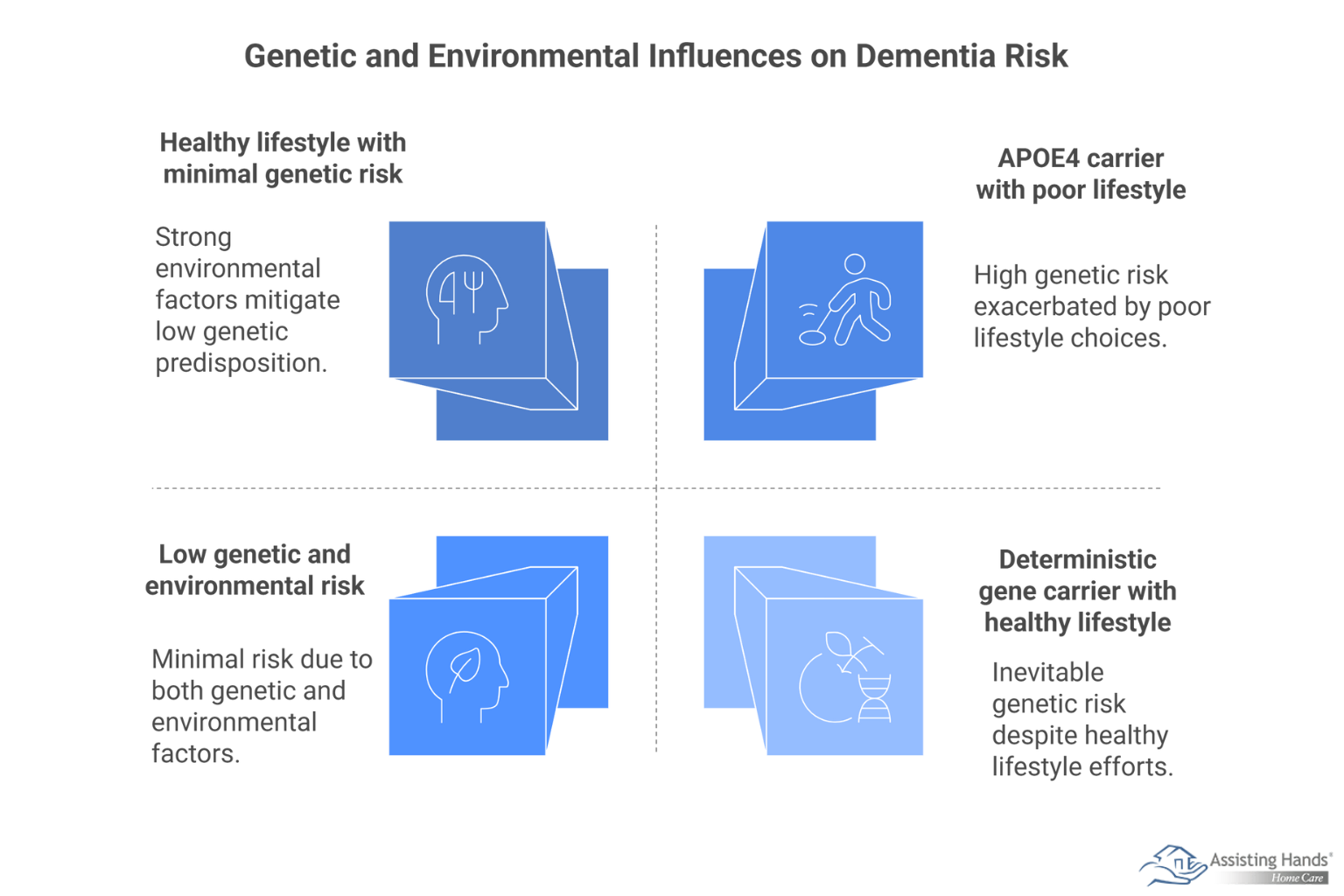
Dementia-related genetic factors fall into two main categories: deterministic genes and risk genes.
Deterministic genes cause rare, early-onset forms of dementia that typically appear before age 65. These include:
- APP (amyloid precursor protein)
- PSEN1 (presenilin 1)
- PSEN2 (presenilin 2)
People who inherit mutations in these genes will almost certainly develop dementia, but these cases represent less than 1 percent of all dementia diagnoses.
Risk genes are much more common and increase the likelihood of developing dementia without guaranteeing it. The most significant risk gene is APOE (Apolipoprotein E), which comes in three variants:
- APOE2 (protective effect)
- APOE3 (neutral effect)
- APOE4 (increases risk)
Carrying one copy of APOE4 increases Alzheimer’s risk by 2 to 3 times, while having two copies increases risk by 8 to 12 times.
How Family History Influences Risk
Family history serves as an important indicator of genetic risk. Having a first-degree relative (parent, sibling, or child) with dementia approximately doubles your risk of developing the condition. The risk increases further when multiple family members are affected or when onset occurs at younger ages.
However, family history reflects both genetic and environmental influences. Families often share similar lifestyles, dietary patterns, and environmental exposures that can contribute to dementia risk beyond genetics alone.
The Interaction between Genes and Environment
Genetic predisposition doesn’t operate in isolation—it interacts with environmental and lifestyle factors to determine overall risk. This concept, known as gene–environment interaction, explains why some people with high genetic risk never develop dementia while others with lower genetic risk do.
Key environmental factors that can modify genetic risk include:
- Physical exercise and cardiovascular health
- Cognitive engagement and education levels
- Social connections and mental stimulation
- Sleep quality and stress management
- Diet and nutrition patterns
Research suggests healthy lifestyle choices can significantly reduce dementia risk even among those with a genetic predisposition, while poor lifestyle habits can accelerate disease development in genetically susceptible individuals.
Seniors who want to remain healthy as they age can benefit in a variety of ways when they receive professional homecare services provided by highly trained, experienced Cincinnati caregivers. Assisting Hands Home Care is here to help your loved one accomplish daily tasks, prevent illness, and focus on living a healthier and more fulfilling life.
Genetic Testing: Benefits and Limitations
Genetic testing for dementia risk is available, but it comes with important considerations. Testing can identify APOE status and screen for rare deterministic mutations, but results require careful interpretation.
Potential benefits of genetic testing include:
- Informing family planning decisions
- Motivating lifestyle changes
- Enabling participation in research
- Guiding medical monitoring
Important limitations include:
- Results don’t predict when or if dementia will occur.
- No treatments can prevent genetically determined dementia.
- Psychological impact of knowing genetic status
- Potential discrimination in insurance or employment
Most medical professionals recommend genetic counseling before and after testing to help individuals understand results and implications.
Aging in place can present a few challenges for seniors living with dementia. However, with professional dementia care that offers Cincinnati families peace of mind, they can still live independently at home. Families can rely on Assisting Hands Home Care to provide their elderly loved ones with mental and social stimulation, timely medication reminders, assistance with meal prep, and much more. Our caregivers are available around the clock to help your loved one live a happier and healthier life. Reach out to us at Assisting Hands Home Care if you need compassionate professional care for your loved one. Call one of our friendly Care Managers today.