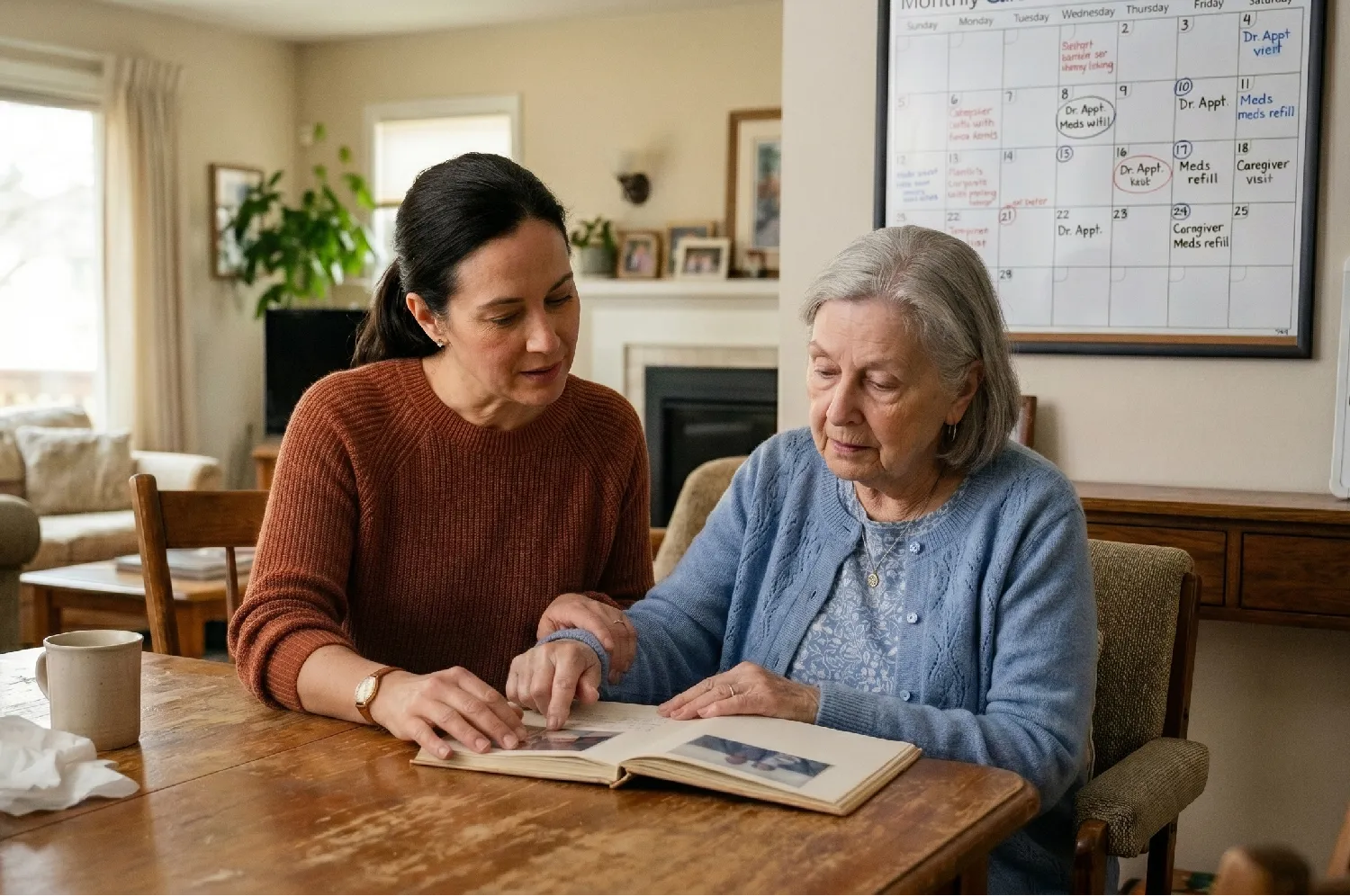
Caregiving for someone with memory loss is typically handled by simplifying communication, creating consistent routines, modifying the home for safety, responding to behavioral changes with empathy, and protecting the caregiver’s own wellbeing. These strategies can reduce confusion, prevent accidents, and promote dignity while supporting daily functioning as memory decreases.
Caring for a senior loved one experiencing memory loss is a journey filled with unique challenges and profound emotional moments. While every situation is different, having a tool kit of practical strategies can significantly reduce stress for both you and your loved one.
How Should You Adjust Communication as Memory Decreases?
Effective communication becomes simpler, calmer, and more intentional as memory loss progresses. As memory fades, the ability to process complex language often diminishes as well. Trying to reason with someone who cannot hold on to recent information usually leads to frustration for both parties. Adjusting how you speak can make daily interactions much smoother.
When communicating, aim to create a calm atmosphere. Minimize background noise, such as a loud TV or radio, which can be distracting and overwhelming. Always approach your loved one from the front and identify yourself, even if you’re a close relative, to avoid startling him or her.
Consider these communication adjustments:
- Keep it simple – Use short sentences and ask one question at a time.
- Avoid arguing – If your loved one says something incorrect, resist the urge to correct him or her. Instead, acknowledge your loved one’s feelings or distract him or her with a different topic.
- Use nonverbal cues – Your tone of voice and body language often communicate more than your words. A gentle touch or a smile can provide reassurance when words fail.
Why Does a Consistent Daily Routine Reduce Anxiety?
A predictable routine creates structure and emotional security. Memory loss creates a sense of chaos and insecurity. A structured daily routine acts as an anchor, helping your loved one feel safer and more oriented. When people know what to expect, they often experience less anxiety and agitation.
Try to schedule daily activities, such as bathing, dressing, and eating, at the same times each day. This consistency reinforces the body’s natural circadian rhythms, which can be disrupted by conditions like dementia.
- Schedule wisely – Plan tasks that require the most mental energy, such as bathing or doctor appointments, for the time of day when your loved one is most alert.
- Create cues – Use visible clocks, calendars, and notes to orient your loved one to the time and date.
- Maintain familiar habits – If your loved one has always read the paper in the morning, try to keep that habit going for as long as possible.
Memory loss is one of many health issues older adults are susceptible to. If your senior loved one has been diagnosed with a serious condition and needs help with tasks like meal prep, transportation, bathing, and grooming, reach out to Assisting Hands Home Care, a leading provider of Cincinnati elderly home care. We also offer comprehensive care for seniors with dementia, Alzheimer’s, and Parkinson’s.
How Can the Home Be Made Safer for a Senior with Memory Loss?
Home safety modifications reduce accident risk while supporting independence. Memory loss impacts judgment and problem-solving skills, increasing the risk of accidents at home. Your loved one might forget how to use household appliances or fail to recognize hazards like a loose rug. Taking proactive steps to “dementia-proof” the home allows your loved one to maintain independence for longer while staying safe.
Focus on reducing clutter and removing tripping hazards. Simple changes like improving lighting in hallways and bathrooms can prevent falls.
Key safety modifications include:
- Locking up hazards – Secure cleaning supplies, medications, and alcohol in locked cabinets.
- Appliance safety – Consider installing auto-shutoff switches on stoves or removing knobs if cooking becomes dangerous.
- Door alarms – If wandering is a concern, install simple alarms on exterior doors to alert you if they’re opened.
If your loved one has been diagnosed with dementia, a professional caregiver can be a wonderful resource for the whole family. Caring for seniors with dementia can be challenging for family caregivers. Luckily, there is dementia care Cincinnati families can rely on. Professional dementia caregivers help seniors with dementia stay safe and comfortable at home by preventing wandering, providing cognitive stimulation, and assisting with household chores.
How Should Behavioral Changes Be Responded to Compassionately?
Behavioral symptoms should be met with empathy rather than correction. Memory loss is rarely just about forgetting names or dates. It often comes with behavioral changes like aggression, anxiety, or suspicion. It’s crucial to remember these behaviors are symptoms of the disease, not a reflection of your loved one’s character or his or her feelings toward you.
When difficult behaviors arise, try to identify the trigger. Is your loved one in pain? Is he or she hungry or thirsty? Is your loved one overstimulated? Addressing the underlying physical need often resolves the behavioral issue.
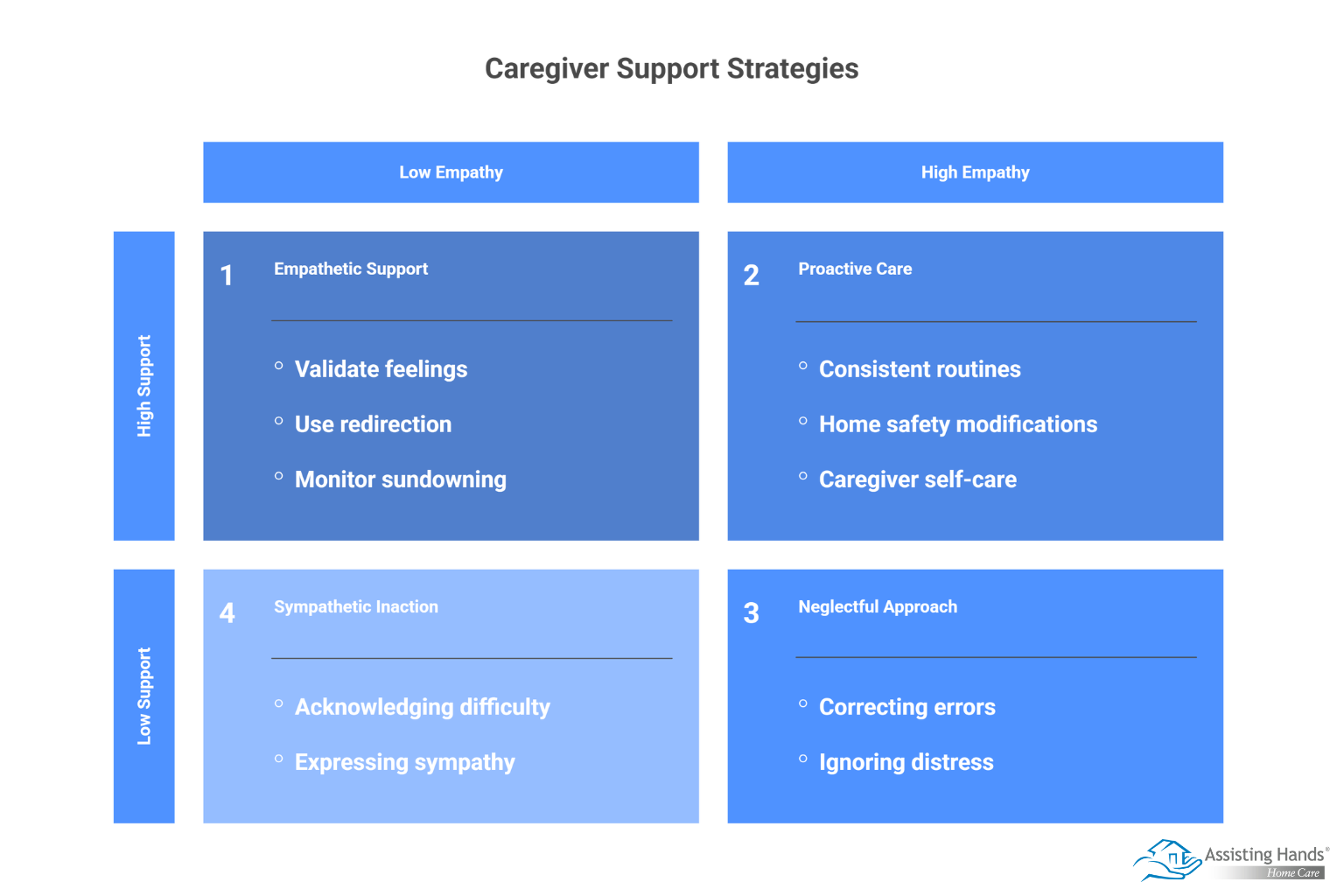
- Validate feelings – Instead of dismissing your loved one’s fears (e.g., “Nobody is stealing from you”), validate the emotion (e.g., “I can see you’re worried about your things. Let’s look for them together”).
- Use redirection – If your loved one becomes agitated, try changing the environment or offering a favorite snack or activity.
- Monitor “sundowning” – Many people experience increased confusion in the late afternoon. Keeping the home well lit and reducing activity during this time can help.
Why Is Caregiver Self-Care Essential for Long-Term Success?
Sustainable caregiving requires protecting your own physical and emotional health. You cannot provide effective care if you’re physically and emotionally depleted. Caregiver burnout is a serious risk that can lead to depression, anxiety, and physical illness. Recognizing your own limits isn’t a sign of weakness. It’s a necessary component of sustainable caregiving.
Building a support network is essential. This might involve family members, professional respite care, or community support groups where you can share experiences with others who understand what you’re going through.
- Take regular breaks – Step away from caregiving duties, even if it’s just for a short walk or a cup of coffee.
- Watch for burnout signs – Be easier on yourself if you notice increased irritability, sleep problems, or feelings of hopelessness.
- Accept help – When friends or family offer to help, say yes. Have a list of specific tasks ready, such as picking up groceries or sitting with your loved one for an hour.
Frequently Asked Questions
Should I correct someone with memory loss when he or she is wrong?
No. Correcting often causes frustration and embarrassment without solving the underlying memory issue, so validation and redirection work better.
What time of day is best for difficult tasks with seniors with memory loss?
Morning hours typically work best, as most people with memory loss experience peak alertness and calmness earlier in the day.
How do I stop someone with dementia from wandering outside?
Install door alarms on exits, place locks high or low on doors where they’re less visible, and ensure your loved one wears identification.
Can routines really reduce anxiety in someone with memory loss?
Yes. Predictable schedules create familiarity and security, significantly reducing confusion-related anxiety and agitation throughout the day.
What’s the first sign I’m experiencing caregiver burnout?
Increased irritability and resentment toward caregiving duties are often the earliest warning signs, followed by sleep disruption and withdrawal from activities.
Family caregivers need to care for their own wellbeing. If you’re caring for an aging loved one in southwestern Ohio and are feeling overwhelmed, consider hiring a professional Cincinnati caregiver to provide respite care. To prevent burnout, you can turn to Assisting Hands Home Care. One of our professional caregivers can assist your loved one at home while you take a nap, go to work, run errands, or go on vacation. To create a customized in-home care plan for your loved one, call us today.