Caring for a senior loved one at home brings peace of mind, but it also requires readiness for sudden medical events, which requires preparing for emergency situations. Knowing exactly how to respond during a crisis can prevent panic and significantly enhance the outcome for your loved one.
How Do You Create a Comprehensive Emergency Plan?
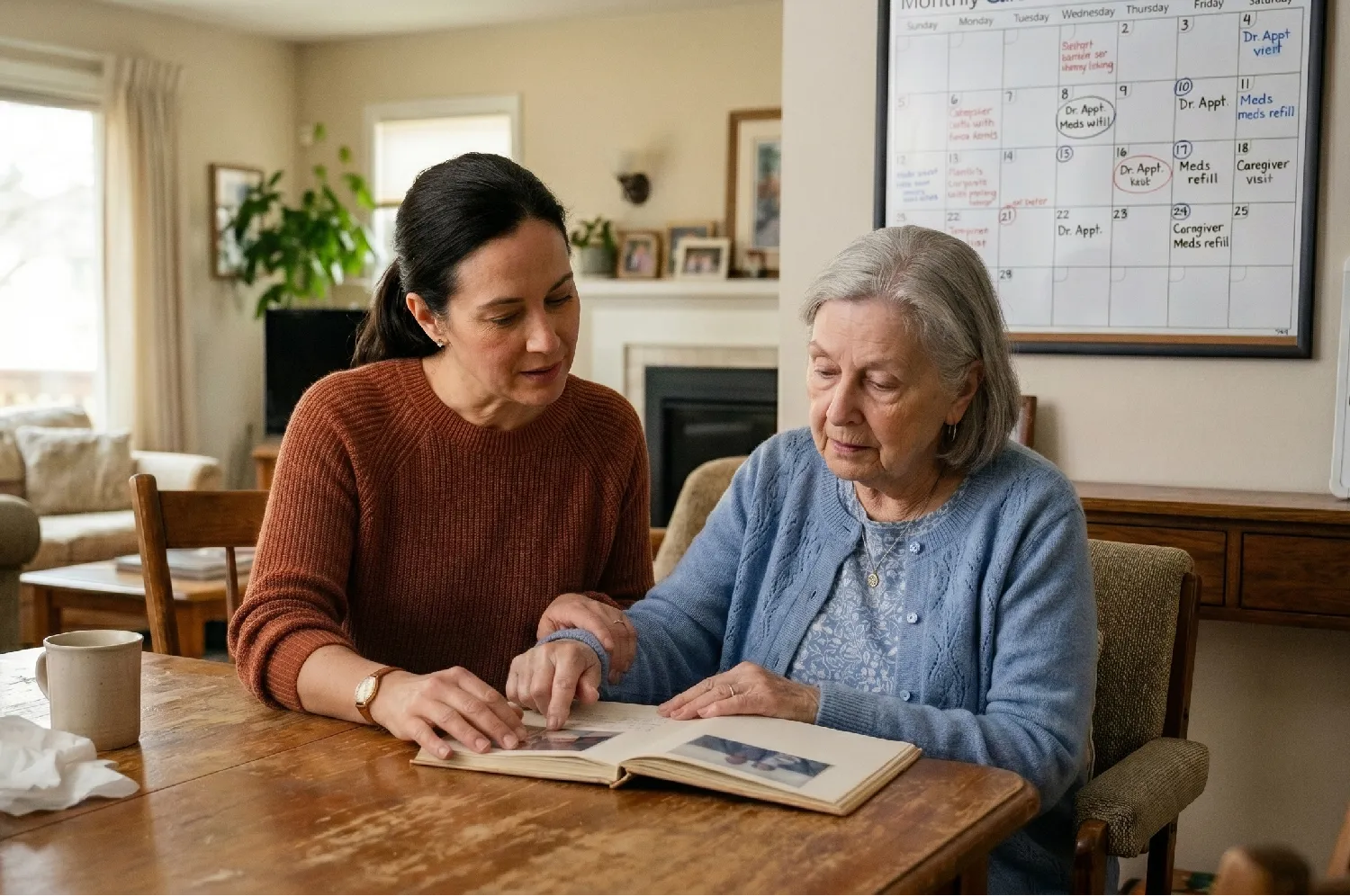
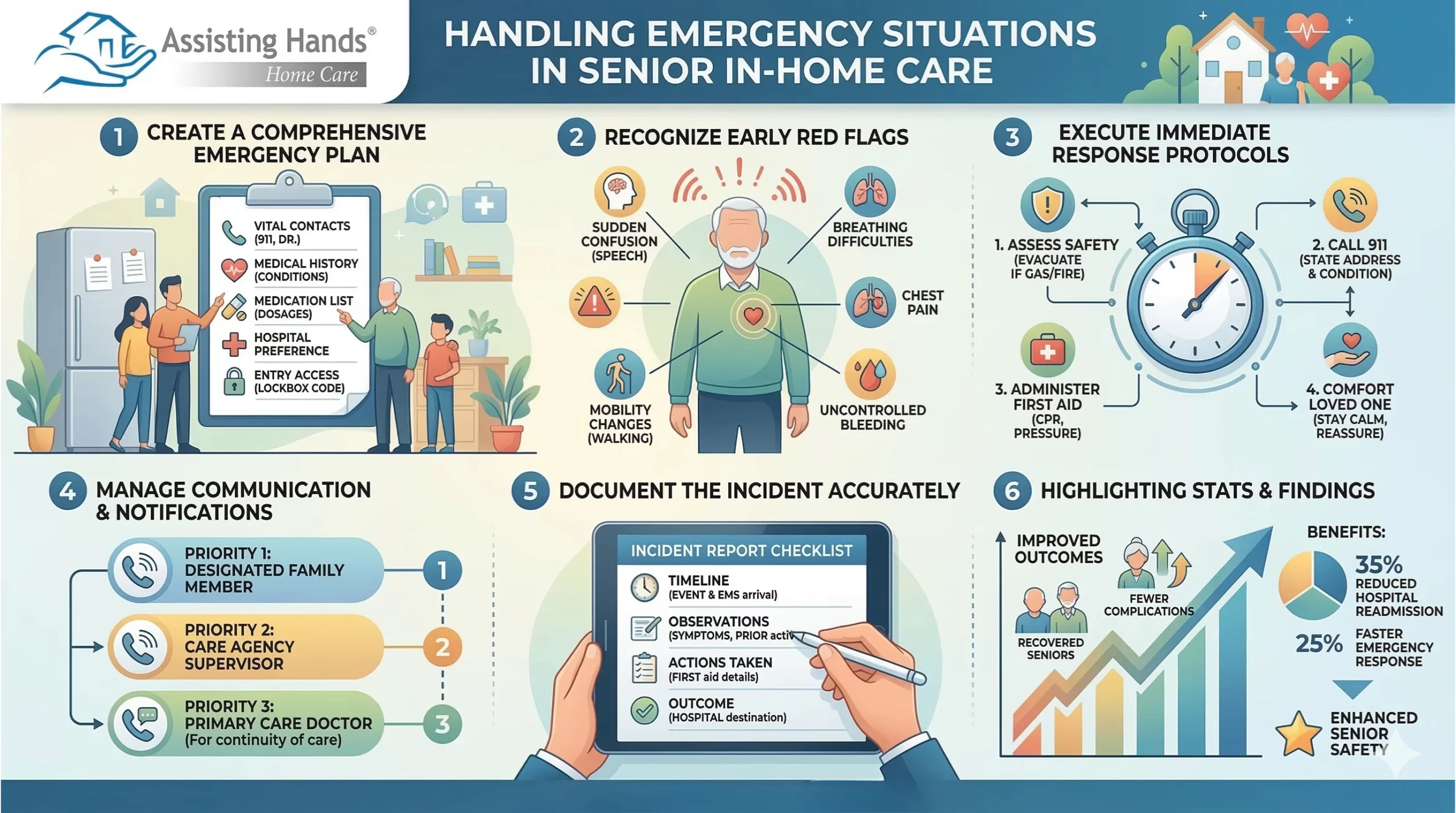
The most effective way to handle a crisis is to prepare for it before it happens. In the high-stress environment of a medical emergency, memory can fail, so having a physical document to reference is vital. This plan should be posted in a highly visible location, such as on the refrigerator or near the main telephone.
Your emergency plan needs to include:
- Vital contacts – The numbers for 911, Poison Control, the primary care physician, and close family members
- Medical history – A concise list of current medical conditions (e.g., diabetes, dementia, heart disease)
- Medication list – Current prescriptions, dosages, and schedules, as well as any known drug allergies
- Hospital preference – The address of the nearest or preferred hospital to provide to ambulance drivers.
- Entry access – Instructions for emergency responders on how to enter the home if the door is locked (such as a lockbox code)
How Can You Recognize the Signs of Distress Early?
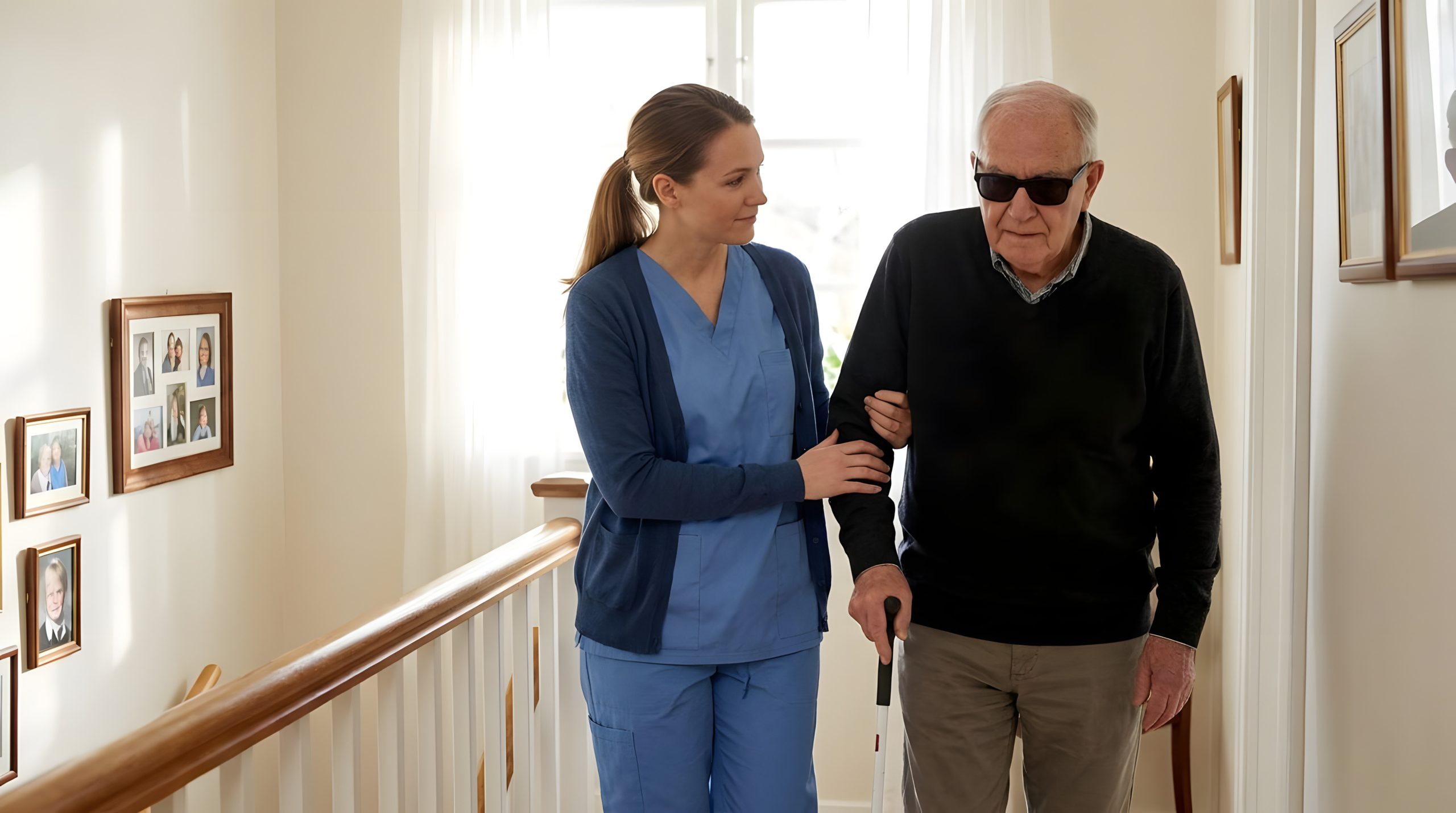
For seniors receiving in-home care, emergencies aren’t always dramatic events like a fall or a sudden collapse. Often, the signs are subtle changes in behavior or physical condition. Caregivers must be trained to observe seniors closely for deviations from their baseline health.
Watch for these red flags that warrant immediate attention:
- Sudden confusion – If your loved one is typically alert but suddenly becomes disoriented or cannot speak clearly, this could indicate a stroke, severe infection, or medication reaction.
- Breathing difficulties – Shortness of breath, wheezing, or gasping for air require instant intervention.
- Chest pain – Never dismiss complaints of pressure or pain in the chest, even if it seems mild.
- Uncontrolled bleeding – Any cut that doesn’t stop bleeding after applying pressure needs professional medical care.
- Mobility changes – If your loved one is suddenly unable to walk or move a limb, this could suggest a fracture or neurological issue.
Professional in-home caregivers can watch for changes in health in the event an emergency occurs. If your senior loved one has been diagnosed with a serious condition and needs help with tasks like meal prep, transportation, bathing, and grooming, reach out to Assisting Hands Home Care, a leading provider of home care Cincinnati families can trust. We also offer comprehensive care for seniors with dementia, Alzheimer’s, and Parkinson’s.
What Are the Best Ways to Execute Immediate Response Protocols?
When an emergency is identified, the caregiver’s primary role is to stabilize the situation and summon help. The first rule is to stay calm, as panic can escalate the situation and distress your loved one further.
Follow this standard response protocol:
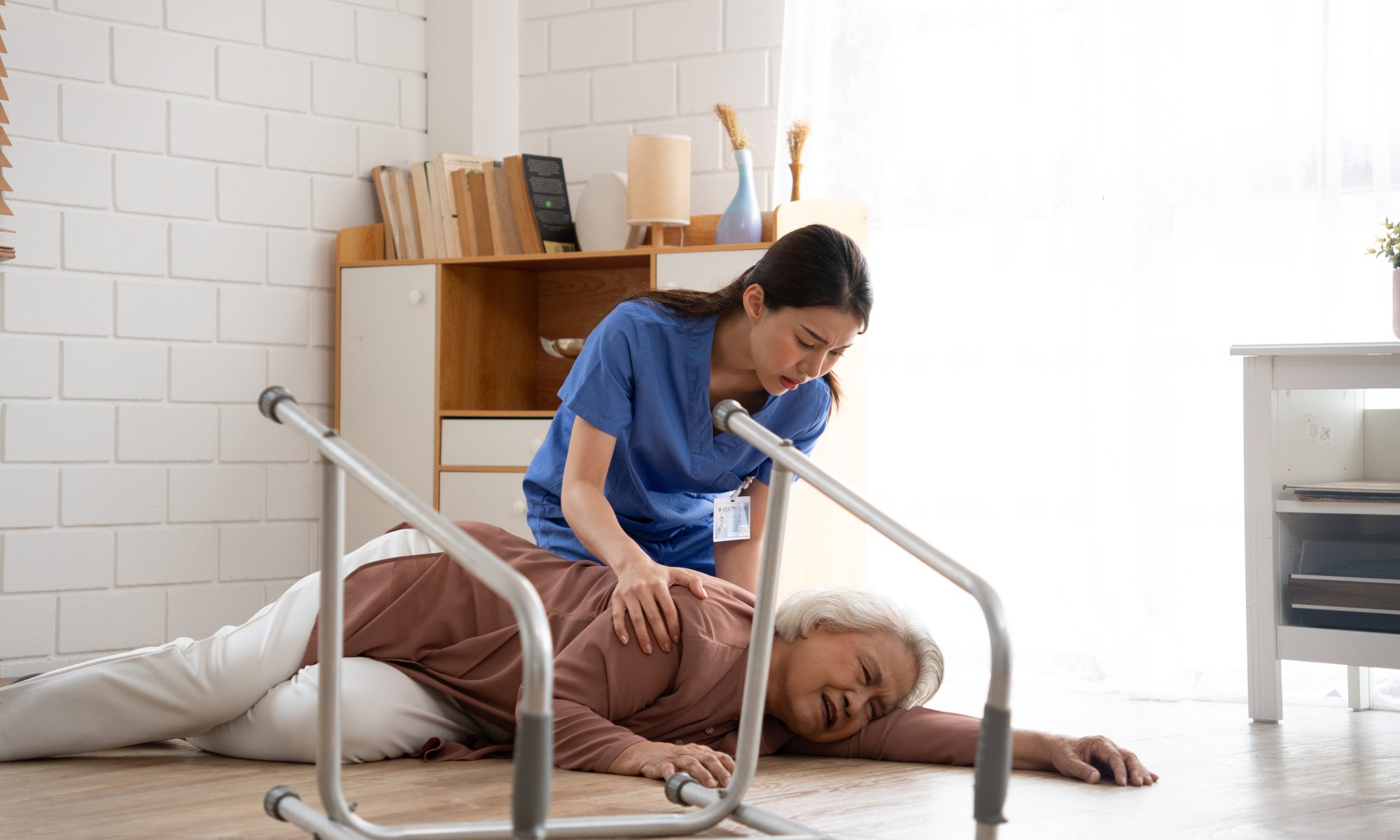
- Assess safety – Ensure the immediate area is safe. For example, if there’s a fire or gas leak, evacuate immediately. If the environment is safe, don’t move your loved one, especially after a fall, as this could worsen a spinal injury.
- Call 911 – Don’t hesitate. It’s better for paramedics to arrive and not be needed than to delay necessary care. clearly state the address, the nature of the emergency, and your loved one’s condition.
- Administer first aid – If trained, perform CPR or the Heimlich maneuver if the situation calls for it. Apply pressure to bleeding wounds.
- Comfort your loved one – Keep your loved one warm and speak in a soothing voice. Reassurance can lower the heart rate and reduce shock.
How Should You Manage Communication and Notifications?
Once emergency services have been contacted and are on their way (or have arrived), the next step is managing communication. There’s often a chain of command or a specific notification list that must be followed.
If you’re a professional caregiver, your agency will have a specific protocol, but generally, the order of notification is:
- Family members – The designated emergency contact needs to be informed immediately. Be clear and concise about what happened and where the senior is being taken.
- Care agency supervisor – If employed by an agency, report the incident so they can manage staffing and liability requirements.
- Medical providers – While the hospital will handle this, having the primary care doctor’s info ready for the ER staff ensures continuity of care.
Living with a serious health condition can make it challenging for seniors to age in place. However, they can maintain a higher quality of life with the help of professional live-in care. Cincinnati seniors can benefit from assistance with meal prep, bathing, transportation to the doctor’s office, medication reminders, and much more.
How Do You Document the Incident Accurately?
After the immediate danger has passed and your loved one is receiving medical care, detailed documentation is required. An incident report isn’t just paperwork. It’s a legal and medical necessity that can prevent future accidents.
An effective incident report should include:
- Timeline – What was the exact time the incident occurred and when did emergency services arrive?
- Observations – What was your loved one doing before the emergency? What symptoms did you observe?
- Actions taken – What specific first aid was administered? Did you perform CPR?
- Outcome – Where was your loved one taken, and who accompanied him or her?
Families who find it difficult to care for their aging loved ones without assistance can benefit greatly from professional respite care. Cincinnati family caregivers who need a break from their caregiving duties can turn to Assisting Hands Home Care. Our respite caregivers can encourage your loved one to eat well, exercise regularly, get plenty of mental and social stimulation, and focus on other lifestyle factors that promote longevity. Contact us today to learn more about our premier in-home senior care.
Frequently Asked Questions
How do home care services handle emergencies?
+
Caregivers are trained to respond quickly, provide first aid, and contact emergency services or family members as needed.
Can home care services create an emergency plan for my loved one?
+
Yes, agencies often develop personalized emergency plans to ensure swift and effective action during critical situations.
Are caregivers trained to recognize medical emergencies?
+
Absolutely, caregivers are trained to identify signs of medical issues like strokes, falls, or sudden illness and act promptly.
How do home care services communicate with families during emergencies?
+
Caregivers keep families informed immediately and provide updates throughout the situation to ensure transparency and support.
Can home care services prevent emergencies?
+
Yes, caregivers assist with fall prevention, medication reminders, and regular health monitoring to reduce the risk of emergencies.