Deciding when to transition to hospice care is a deeply personal and often difficult choice for seniors and their families. Understanding what hospice care involves and when it might be the right option can bring clarity and comfort during a challenging time. This guide explains the purpose of hospice care and how it supports individuals with life-limiting illnesses.
What Is Hospice Care?
Hospice care is a specialized form of care focused on providing comfort, support, and enhanced quality of life for individuals with terminal illnesses. Instead of focusing on curing the illness, the primary goal of hospice is to manage symptoms and relieve pain, allowing the individual to live as fully and comfortably as possible. This care can be provided in various settings, including at home, in a hospital, or at a dedicated hospice facility. The care team typically includes doctors, nurses, social workers, and spiritual advisors who work together to address the physical, emotional, and spiritual needs of seniors and their families.
Signs It Might Be Time for Hospice
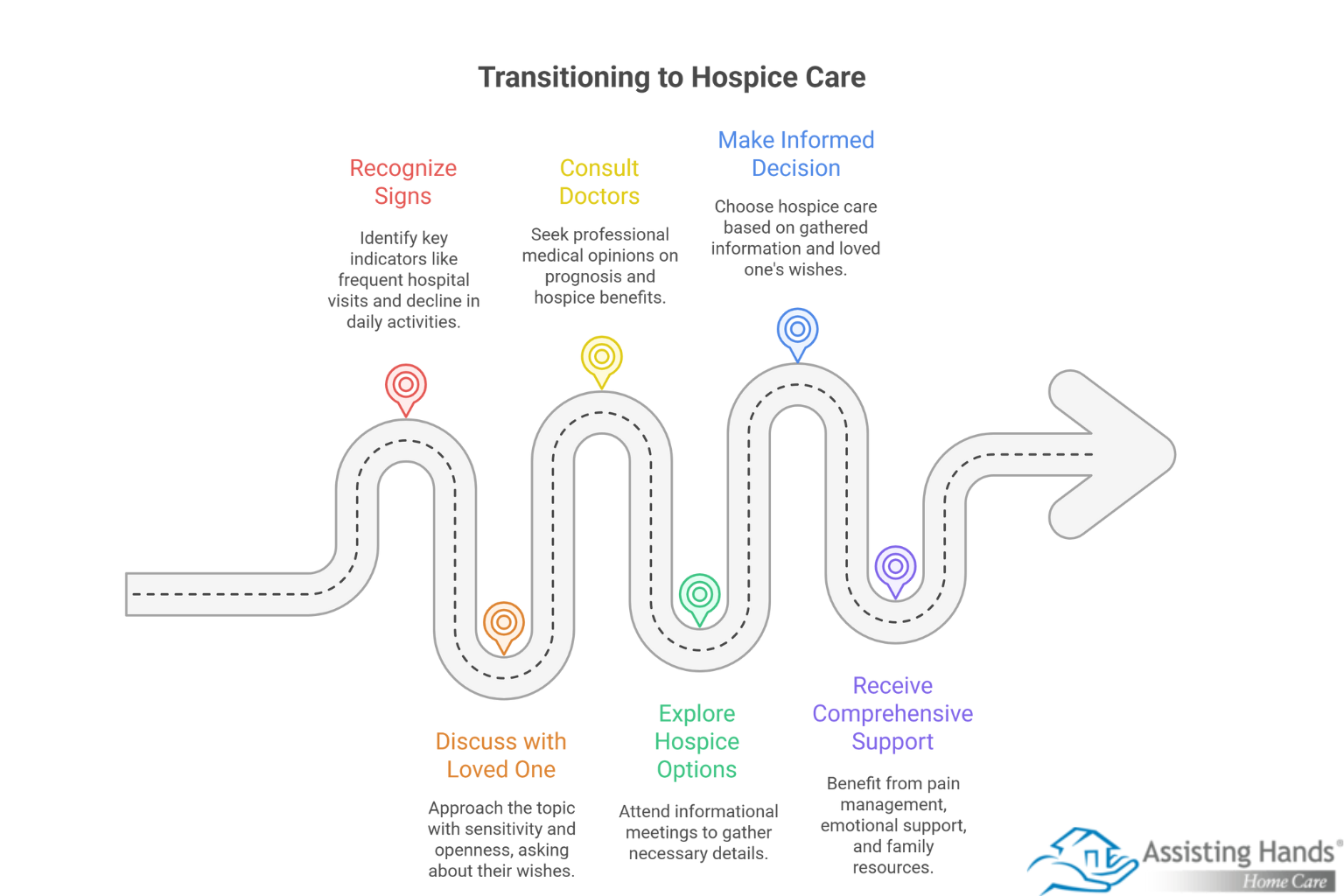
Knowing when to begin hospice care can be challenging, but certain signs may indicate it’s time to consider this option. It’s often appropriate when curative treatments are no longer effective or desired and the focus shifts to comfort. Key indicators include:
- A doctor has determined a life expectancy of six months or less if the illness runs its natural course.
- Frequent hospital visits or emergency room trips have become common.
- The senior is experiencing a significant decline in the ability to perform daily activities, such as bathing, dressing, and eating.
- There’s a noticeable increase in pain, shortness of breath, nausea, or other severe symptoms.
- The senior has expressed a desire to stop aggressive treatments and focus on quality of life.
Seniors can face a variety of age-related challenges. Though some families choose to take on the caregiving duties, there may come a time when they need trusted home care Cincinnati families can rely on. Families sometimes need respite from their duties so they can focus on their other responsibilities, and some seniors need around-the-clock assistance that their families are not able to provide. Assisting Hands Home Care is here to help.
The Benefits of Hospice Care
Hospice care offers comprehensive support that extends beyond just medical treatment. For seniors, the primary benefit is pain and symptom management, which helps them maintain dignity and comfort. Emotional and psychological support is also a cornerstone of hospice, helping seniors cope with anxiety and depression.
Families also receive significant support. Hospice teams provide education on how to care for their loved ones and offer resources to manage the emotional stress of caregiving. Bereavement counseling and support groups are available to help family members navigate their grief after their loved ones have passed. This holistic approach ensures both seniors and their families are cared for throughout the end-of-life journey.
Family caregivers need to care for their own wellbeing. If you’re caring for an aging loved one and are feeling overwhelmed, consider hiring a professional caregiver to provide respite care Cincinnati families can trust. To prevent burnout, you can turn to Assisting Hands Home Care. One of our professional caregivers can assist your loved one at home while you take a nap, go to work, run errands, or go on vacation.
How to Start the Conversation
Initiating a conversation about hospice care with a loved one or a doctor can feel daunting. It’s best to approach the topic with sensitivity and openness. Start by asking about your loved one’s goals and wishes for his or her care. You might say “I want to make sure we’re honoring your wishes. Have you thought about what’s most important to you for your care moving forward?”
Speaking with a primary care physician, a specialist, or a palliative care doctor is a crucial step. These individuals can provide professional medical opinions on your loved one’s prognosis and explain how hospice could be beneficial. Many hospice organizations also offer informational meetings to answer questions without any commitment, providing families with the information they need to make informed decisions.
Some seniors only require help with a few daily tasks so they can maintain their independence. However, those living with serious illnesses may need more extensive assistance. Luckily, there is professional live-in care Cincinnati seniors can rely on. Home can be a safer and more comfortable place for your loved one to live with the help of an expertly trained and dedicated around-the-clock caregiver. Trust your loved one’s care to the professionals at Assisting Hands Home Care. Reach out to one of our compassionate Care Managers today.