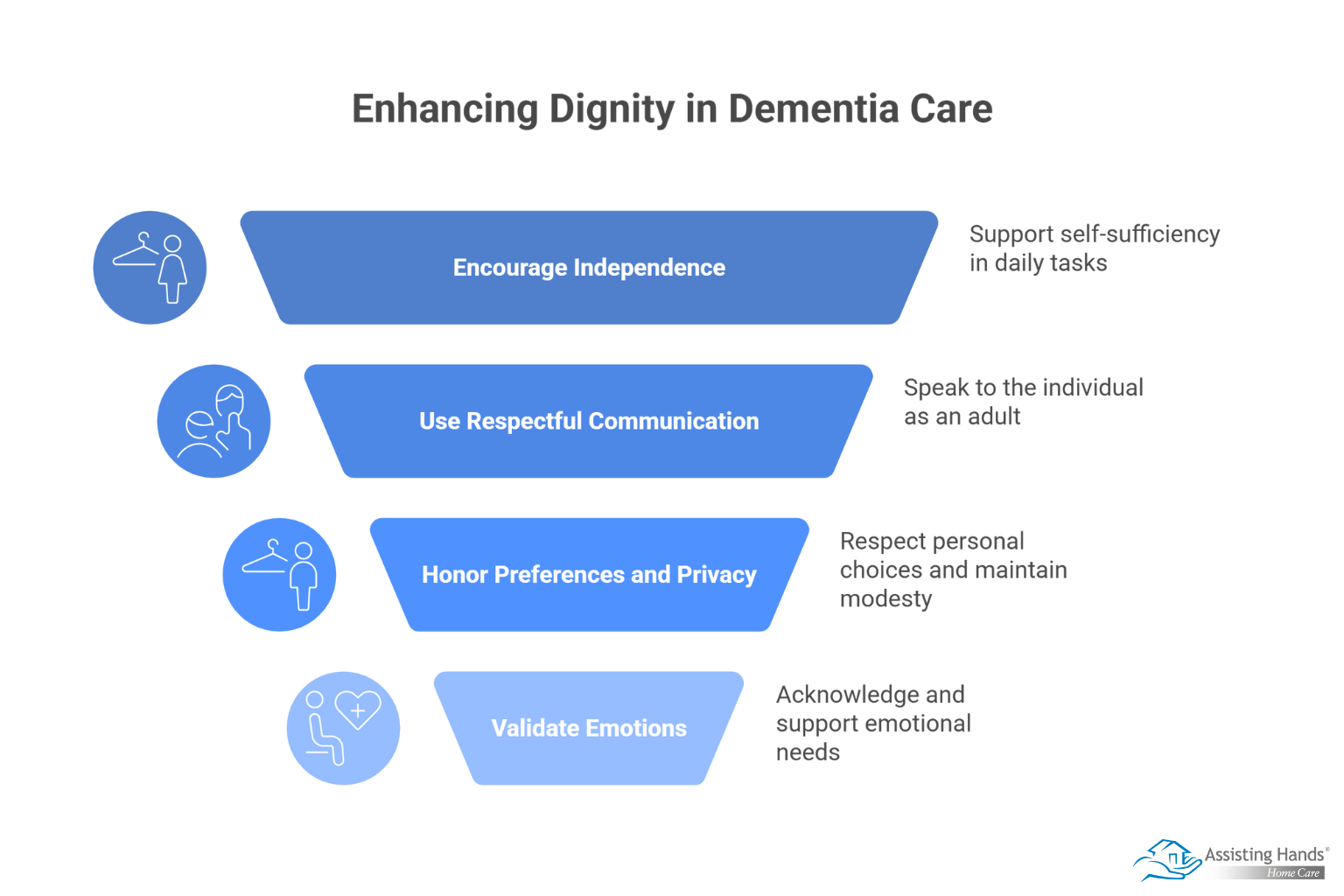
You can help someone receiving dementia care maintain dignity by encouraging independence, using respectful communication, honoring personal preferences and privacy, and validating emotions.
Caring for a senior loved one with dementia presents many challenges, but one of the most vital aspects of caregiving is ensuring he or she feels respected and valued. By focusing on person-centered care and small daily interactions, you can significantly impact your loved one’s self-esteem and quality of life. The following strategies provide practical ways to support dignity throughout the progression of the disease.
How Can Caregivers Support Independence in Everyday Activities?
Encouraging independence in daily tasks helps seniors maintain confidence and a sense of accomplishment. One of the quickest ways to strip seniors of their dignity is to do everything for them, assuming they’re no longer capable. While dementia affects cognitive and physical abilities, many individuals retain skills well into the disease’s progression. Allowing your loved one to perform tasks independently fosters a sense of accomplishment and self-worth.
- Break tasks down – If a task like getting dressed seems overwhelming, break it into smaller steps. Lay out clothes in the order they should be put on or hand your loved one a single item at a time.
- Focus on ability, not speed – It might take longer for your loved one to brush his or her teeth or fold laundry, but patience is key. Rushing can cause anxiety and feelings of inadequacy.
- Use adaptive aids – Simple tools like shoes with Velcro straps or cups with large handles can make independence easier to maintain.
Aging in place can present a few challenges for seniors living with dementia. However, with professional dementia care that offers Cincinnati families peace of mind, they can still live independently at home. Families can rely on Assisting Hands Home Care to provide their elderly loved ones with mental and social stimulation, timely medication reminders, assistance with meal prep, and much more. Our caregivers are available around the clock to help your loved one live a happier and healthier life.
What Communication Methods Show Respect to Someone with Dementia?
Using respectful language and practicing active listening can preserve dignity and emotional wellbeing. How you speak to your loved one sets the tone for your relationship and his or her emotional wellbeing. It’s common for caregivers to accidentally slip into “elderspeak”—a patronizing style of speech that resembles baby talk. This can feel demeaning to an adult who has lived a full life.
- Speak to your loved one as an adult – Avoid high-pitched voices or terms of endearment like “good girl” or “sweetie” unless you know your loved one appreciates them. Use your loved one’s name.
- Listen actively – Even if your loved one’s speech is confused or repetitive, show you’re listening. Maintain eye contact and respond to the emotions behind the words rather than correcting factual errors.
- Avoid talking past your loved one – Never discuss your loved one’s care or condition with others while your loved one is in the room, as if he or she isn’t there. Include your loved one in the conversation whenever possible.
Highly trained caregivers with experience in caring for seniors with dementia can be a fantastic resource for family members. Families looking for top-rated Cincinnati elder care providers can reach out to Assisting Hands Home Care. From respite care to specialized Alzheimer’s, dementia, stroke, and Parkinson’s care, there are many ways we can make life easier for seniors and their loved ones.
How Do You Respect Personal Preferences and Maintain Privacy in Care?
Respecting preferences and protecting privacy helps seniors maintain their identity and personal dignity. Dementia doesn’t erase a person’s history, likes, or dislikes. Honoring who your loved one was before the diagnosis keeps his or her identity intact. Privacy is also a major component of dignity, particularly when assistance is needed with personal care like bathing or toileting.
- Maintain grooming standards – If your loved one always wore makeup, enjoyed a clean-shaven face, or preferred a specific hairstyle, help him or her keep up these appearances. Looking like themselves helps seniors feel like themselves.
- Offer choices – Even simple choices provide a sense of control. Ask “Would you like coffee or tea?” or “Do you want to wear the blue shirt or the red one?” Limit choices to two options to avoid overwhelm.
- Ensure privacy during care – Close doors and curtains during personal care routines. Explain what you’re doing before you do it to avoid startling your loved one, and cover parts of the body not being washed to maintain modesty.
How Can Validation Techniques Support Emotional Dignity in Dementia?
Validation meets emotional needs and reduces distress when reality becomes confusing. As dementia progresses, individuals may experience confusion about time and place. They might ask for parents who have passed away or believe they need to go to work. Correcting them often leads to distress, embarrassment, and conflict. Instead, adopting a validation approach supports your loved one’s emotional needs without forcing him or her into a reality he or she can no longer grasp.
- Join your loved one’s journey – If your loved one is looking for his or her mother, asking “Where is my mom?” instead of replying “She died years ago,” try responding with “Tell me about your mom. Was she a good cook?” This validates your loved one’s feelings of missing her.
- Acknowledge emotions – If your loved one is upset or scared, validate those feelings. Say “I can see you’re worried” rather than dismissing your loved one’s fears.
- Use therapeutic fibs – In situations where the truth causes pain, bending the truth to bring comfort is often the kinder, more dignified choice. The goal is to reduce anxiety and preserve happiness.
Frequently Asked Questions
How do dementia home care services uphold dignity?
Caregivers focus on respectful communication, personalized care, and preserving independence to ensure individuals feel valued and respected.
Why is dignity important in dementia care?
Maintaining dignity fosters emotional wellbeing, builds trust, and helps individuals feel a sense of self-worth despite cognitive challenges.
Can caregivers help individuals with dementia maintain independence?
Yes, caregivers encourage participation in daily tasks and decision-making to promote independence while providing necessary support.
How do caregivers handle sensitive tasks while preserving dignity?
Caregivers approach personal care tasks with discretion, empathy, and professionalism to ensure comfort and respect.
What role does dignity play in enhancing quality of life for individuals with dementia?
Dignity enhances emotional health, strengthens relationships, and creates a positive care experience, contributing to overall quality of life.
Caring for a loved one with dementia can be challenging, but compassionate help is available. Certain age-related conditions can make it more challenging for older adults to age in place safely and comfortably, but experts in live-in care for Cincinnati seniors are available around the clock to help aging adults manage their health. Whether your loved one is living with dementia or recovering from a stroke, you can trust the professional caregivers from Assisting Hands Home Care to enhance his or her quality of life. Call us today to talk to one of our compassionate Care Managers about our high-quality home care services.