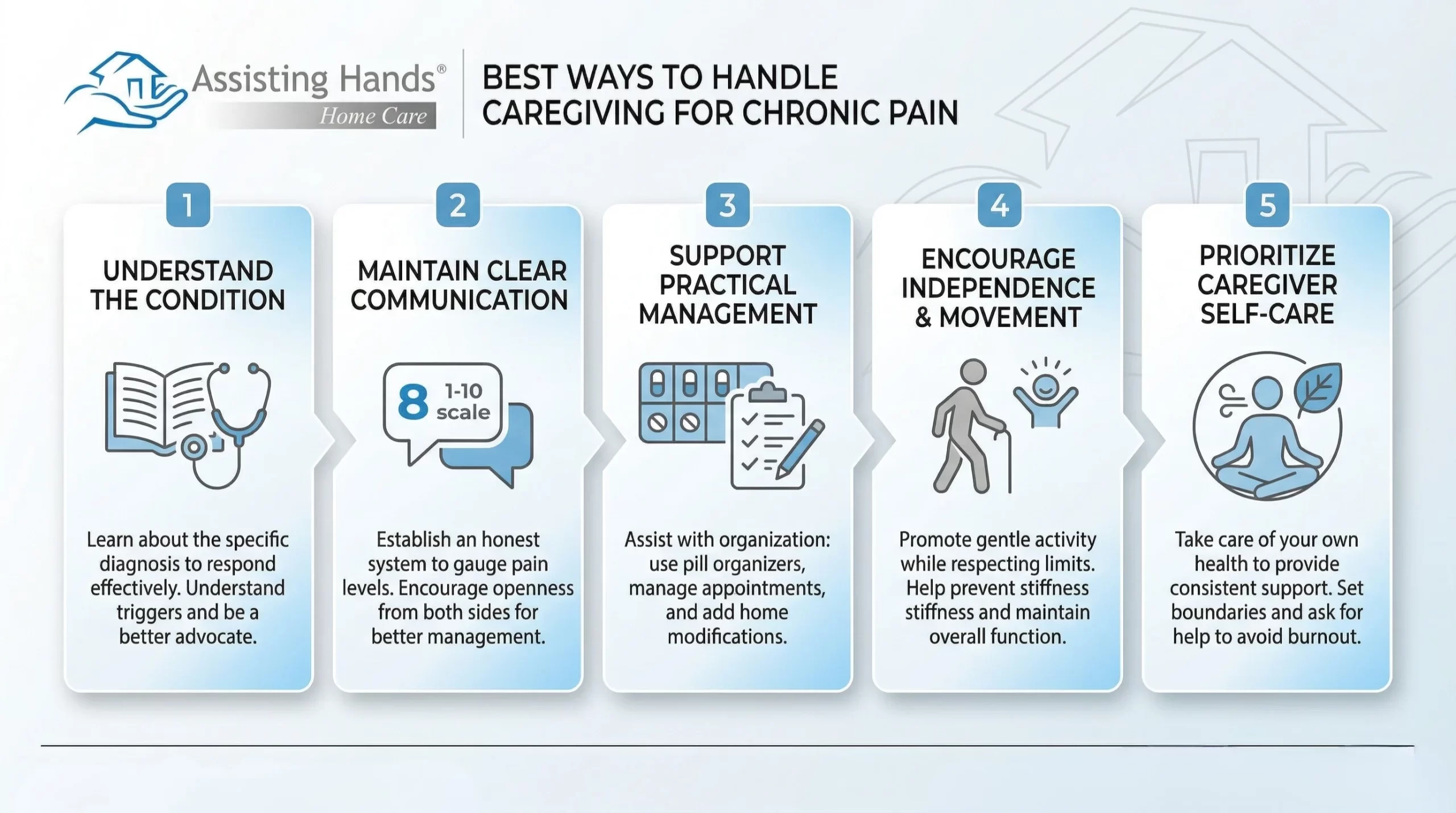
The best ways to handle caregiving for someone with chronic pain include understanding the condition, maintaining clear communication, supporting daily management tasks, encouraging safe activity, and prioritizing caregiver self-care. A balanced, compassionate approach can enhance comfort, preserve independence, and reduce stress for both individuals.
Watching a senior loved one live with chronic pain is difficult, but your support can make a significant difference in his or her quality of life. By understanding the specific health condition and establishing clear communication channels, you can navigate the complexities of caregiving more effectively.
Why Is It Important to Understand Your Loved One’s Condition?
Learning about the specific diagnosis helps you respond more effectively to symptoms and challenges that may not always be evident. The first step in effective caregiving is understanding the specific nature of your loved one’s pain. Chronic pain is complex and often invisible, which can lead to misunderstandings if you aren’t familiar with the symptoms. Take the time to accompany your loved one to doctor’s appointments or read reputable medical literature regarding the diagnosis.
Knowing what to expect helps in several ways:
- Empathy – You’ll better understand why your loved one might be irritable or fatigued.
- Triggers – You can identify environmental or stress-related triggers that worsen your loved one’s pain.
- Treatment options – You can become an advocate for your loved one, asking informed questions during medical consultations.
Hiring a professional caregiver is one of the best ways to help your parent address pain. If you have a senior loved one who needs help maintaining a high quality of life while aging in place, reach out to Assisting Hands Home Care, a top-rated Cincinnati senior care provider. Our caregivers help seniors focus on healthy lifestyle habits such as eating nutritious foods, exercising regularly, and maintaining strong social ties, and we offer mentally stimulating activities that can boost cognitive health and delay the onset of dementia.
How Can You Communicate Effectively about Chronic Pain Levels?
Creating a clear and honest communication system allows both you and your loved one to better manage expectations and daily needs. Because pain is subjective, it’s impossible to know exactly how someone feels unless he or she tells you. Establish a system for communicating pain levels that doesn’t rely solely on guessing. Many caregivers find it helpful to use a numbered scale (1 to 10) to gauge how their loved ones are feeling each day.
Encourage your loved one to be honest about his or her limitations. Conversely, you must be honest about your own capacity. If you’re feeling overwhelmed, communicate this gently. Open dialogue prevents resentment from building up on both sides. Active listening is crucial here. Sometimes, your loved one may not need a solution but simply needs to feel heard and validated in his or her challenges.
What Practical Assistance Can Help Seniors Manage Chronic Pain?
Supporting organization and daily routines can make complex pain management plans more manageable and less overwhelming. Chronic pain often requires a multifaceted management approach involving medication, physical therapy, and lifestyle changes. As a caregiver, you can play a pivotal role in organizing these elements. However, the goal is to assist, not to take over completely, as maintaining a sense of agency is important for your loved one’s mental health.
Consider helping with the following practical tasks:
- Medication organization – Use pill organizers or smartphone apps to track dosage schedules and refill dates.
- Appointment logistics – Handle the scheduling of physical therapy, chiropractic visits, or specialist appointments to reduce your loved one’s mental load.
- Household modifications – Arrange furniture or acquire assistive devices (like grab bars or shower chairs) to make daily movement safer and less painful.
How Can You Encourage Independence and Safe Movement?
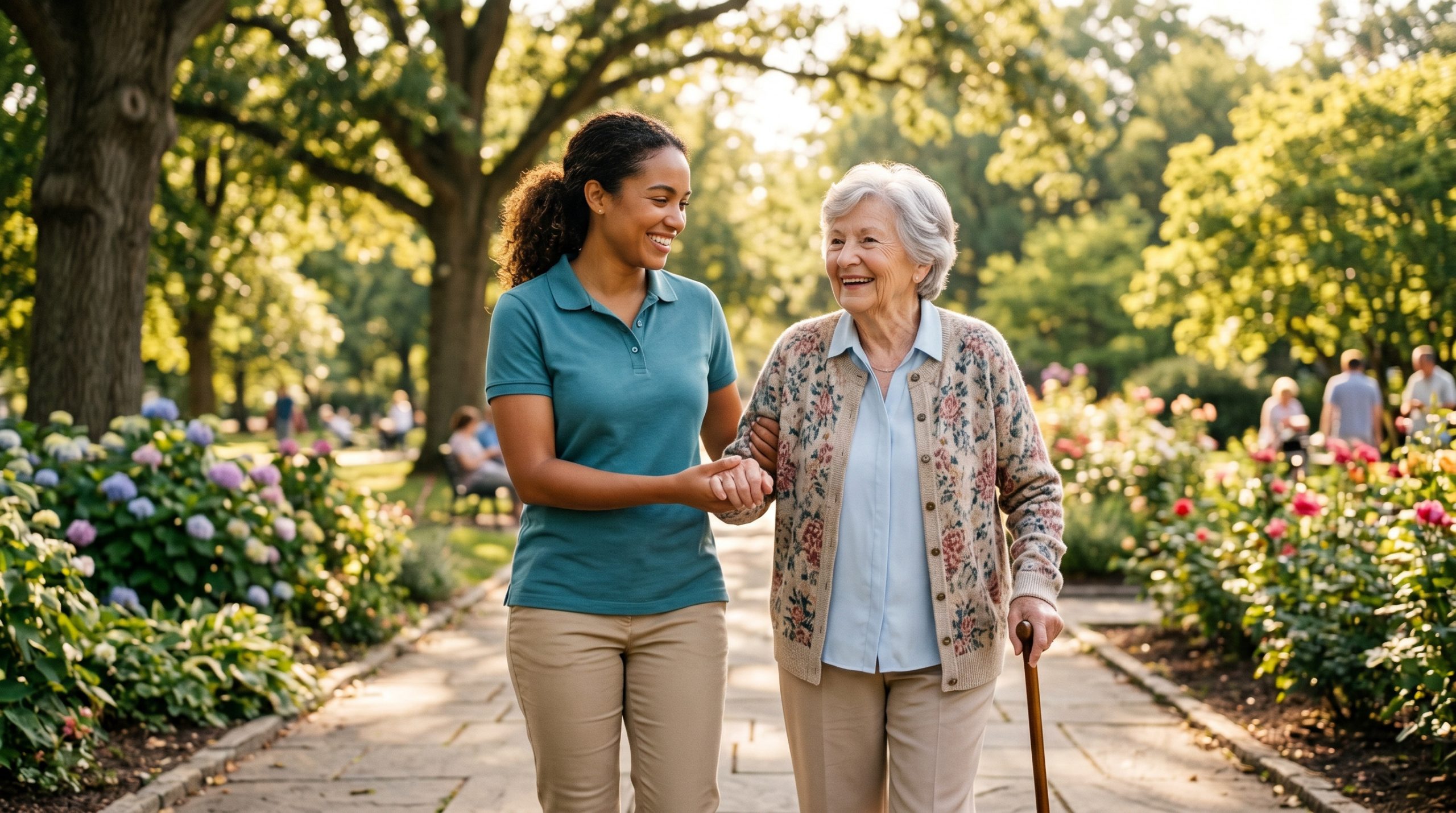
Promoting gentle activity while respecting limitations can help your loved one prevent stiffness and maintain overall function. It’s natural to want to do everything for a loved one in pain to spare him or her the discomfort. However, excessive rest can sometimes exacerbate chronic pain conditions and lead to muscle atrophy or stiffness. Unless a doctor advises complete bed rest, encourage your loved one to do what he or she can independently.
Work with your loved one’s healthcare provider to understand safe levels of activity. Gentle movement, such as walking or stretching, is often prescribed to manage pain. Be your loved one’s cheerleader in these moments. Celebrating small victories like a short walk around the block or completing a household chore independently can boost your loved one’s morale and physical resilience.
Some seniors only require help with a few daily tasks so they can maintain their independence. However, those living with serious illnesses may need more extensive assistance. Luckily, there is exceptional professional 24-hour care Cincinnati seniors can rely on. Home can be a safer and more comfortable place for your loved one to live with the help of an expertly trained and dedicated around-the-clock caregiver.
Why Is Caregiver Self-Care Essential for Long-Term Support?
Taking care of your own physical and emotional health ensures you can provide consistent, effective support over time. You cannot provide high-quality care if you’re physically and emotionally depleted. Caregiver burnout is a very real risk when looking after someone with chronic issues, since the situation often has no clear end date. Prioritizing your own wellbeing is a prerequisite for sustainable caregiving.
To maintain your health:
- Set boundaries – Designate times when you’re “off the clock” to rest or pursue your own hobbies.
- Seek support – Join a support group for caregivers where you can share experiences and advice with people who understand your situation.
- Ask for help – Don’t hesitate to ask other family members or friends to step in occasionally so you can take a break.
Helping an older adult mitigate pain can be a challenging task. Families who find it difficult to care for their aging loved ones without assistance can benefit greatly from professional respite, live-in, and overnight care for Cincinnati seniors. Family caregivers who need a break from their caregiving duties can turn to Assisting Hands Home Care. Our caregivers can encourage your loved one to eat well, exercise regularly, get plenty of mental and social stimulation, and focus on other lifestyle factors that promote longevity. Call us today to learn about our comprehensive in-home care plans.
Frequently Asked Questions
How can home care services support individuals with chronic pain?
+
Caregivers assist with daily tasks, medication reminders, and comfort measures to help seniors manage pain and enhance their quality of life.
Can caregivers help with pain management routines?
+
Yes, caregivers can support prescribed routines such as physical therapy exercises, heat or cold applications, and relaxation techniques.
How do home care services address the emotional impact of chronic pain?
+
Caregivers provide companionship, encouragement, and a listening ear to alleviate feelings of frustration or isolation.
Are home care plans tailored for individuals with chronic pain?
+
Absolutely. Care plans are customized to address specific pain management needs and ensure comfort.
Can home care services prevent pain from worsening?
+
Yes, caregivers assist with mobility, proper posture, and adherence to treatment plans to prevent pain from escalating.